
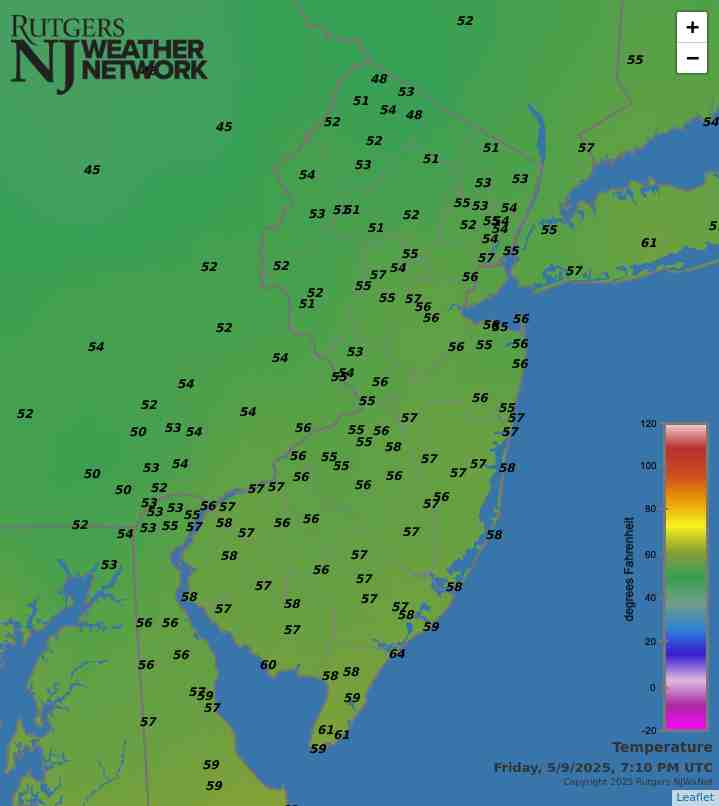





Latest Temperatures

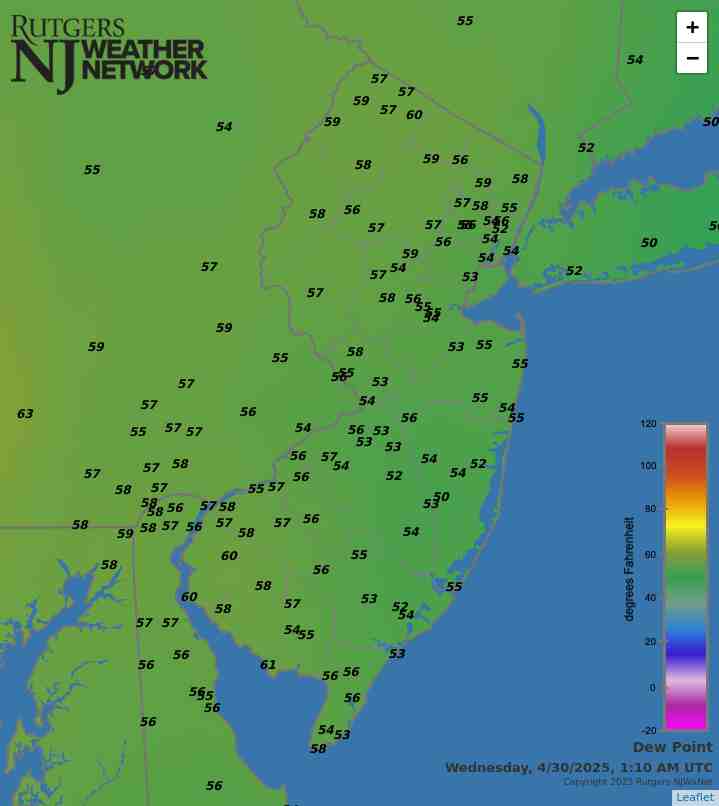
Current Dew Point

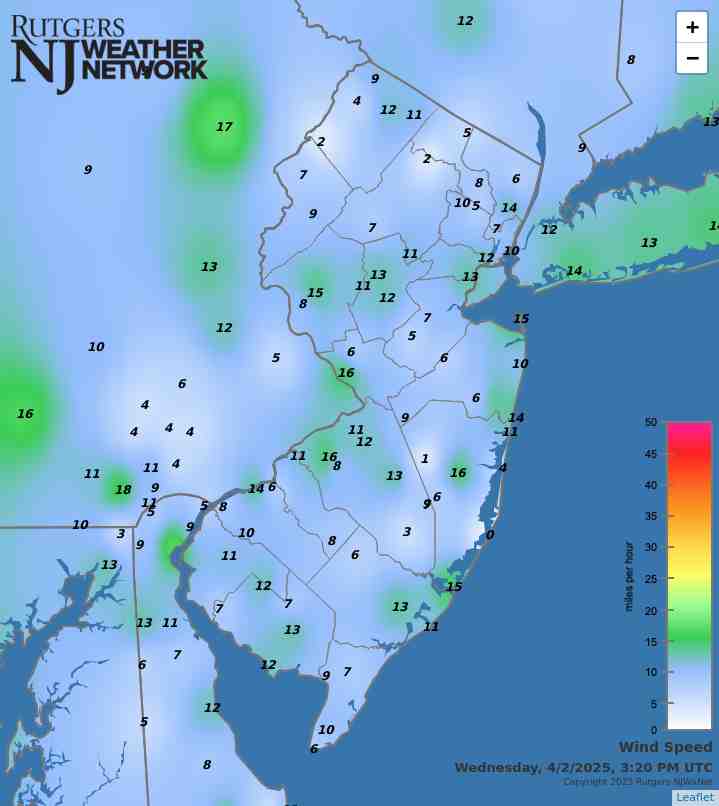
Latest Wind Speeds

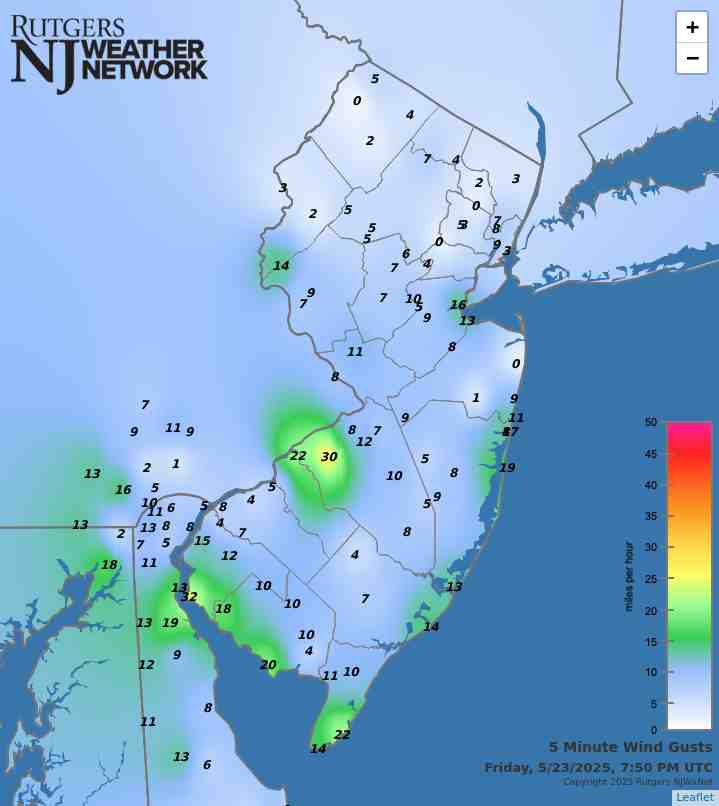
Wind Gusts

Top Story

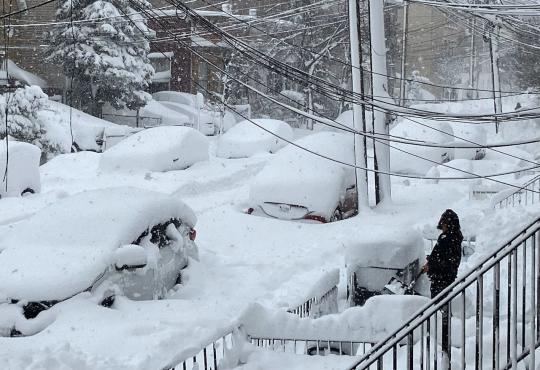
A snowy scene in Jersey City (Hudson County) during the afternoon of February 23rd towards the end of major winter storm.
A snowy scene in Jersey City (Hudson County) during the afternoon of February 23rd towards the end of major winter storm. Around 23" of snow was reported in Jersey City. Photo by The Star-Ledger.

The adage “wash, rinse, repeat” is an appropriate one when reviewing New Jersey’s weather and climate conditions over this past winter. There were multiple snowstorms and cold spells throughout the season, with below-normal precipitation (rain and melted snow/sleet) in each month as the state continues to experience drought conditions that date back almost two years. All this will be covered in a seasonal overview later in this report. First, a recap of conditions in a February that exemplifies what all months experienced this past winter.

The statewide February temperature averaged 29.6°. This is 4.3° below the 1991–2020 normal and ranks as the 46th coldest February dating back to 1895. The average high temperature of 37.9° is 5.2° below normal and ranks 35th coldest. The average low of 21.4° is 3.2° below normal, ranking 55th coldest.

Precipitation averaged 2.01” across NJ, 0.85” below normal and tied with three other years for the 23rd driest February. This marked 19 of the most recent 22 months with below-normal precipitation. More on this is provided in the winter section of this report.

February snowfall averaged 16.1” across NJ. This is 7.9” above the 1991–2020 normal, ranking as the 18th snowiest since 1895. The northern snow region averaged 15.6” (+5.2”, 29th snowiest), the central region 17.8” (+8.7”, 18th snowiest), and the southern region 15.6” (+8.9”, 12th snowiest). This was the snowiest February since 2021.

Latest Extremes

City, State Temp
Woodbine, NJ 52
Cape May Court House, NJ 51
West Cape May, NJ 51
Dennis Twp., NJ 51
Egg Harbor Twp., NJ 50
City, State Temp
High Point Monument, NJ 37
Wantage, NJ 41
Vernon Twp., NJ 41
Hackettstown, NJ 41
Ramsey, NJ 41
most current information as of Apr 3 9:35 AM

Latest Conditions & Forecast

New Brunswick, NJ

Rutgers University Meteorology Program

44°F

Wind

2 mph from the SE

Wind Gust

4 mph from the SE

Areas Dense Fog then Partly Sunny
72 °F
Slight Chance Showers and Patchy Fog
59 °F
Patchy Fog then Chance Showers
76 °F
Chance Showers
50 °F
Showers
73 °F
Mostly Cloudy
41 °F
Mostly Sunny
57 °F
Partly Cloudy
38 °F
Mostly Sunny
53 °F
Mostly Clear
30 °F
Sunny
55 °F
Mostly Clear
35 °F
Sunny
66 °F

Today

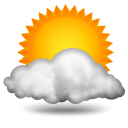
Areas of dense fog before noon. Otherwise, cloudy, then gradually becoming mostly sunny, with a high near 72. East wind 5 to 10 mph becoming southwest in the afternoon.

Tonight

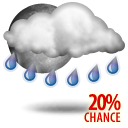
A slight chance of showers before 2am. Patchy fog after 5am. Otherwise, partly cloudy, with a low around 59. Southwest wind around 5 mph. Chance of precipitation is 20%.

Saturday

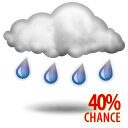
A chance of showers and thunderstorms between 2pm and 5pm, then a chance of showers after 5pm. Patchy fog before 8am. Otherwise, partly sunny, with a high near 76. Calm wind becoming east around 5 mph in the afternoon. Chance of precipitation is 40%.

Saturday Night

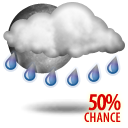
A chance of showers before 11pm, then a chance of showers and thunderstorms between 11pm and 2am, then a chance of showers after 2am. Mostly cloudy, with a low around 50. East wind 5 to 10 mph. Chance of precipitation is 50%. New rainfall amounts of less than a tenth of an inch, except higher amounts possible in thunderstorms.

Sunday

Showers. High near 73. West wind around 10 mph, with gusts as high as 25 mph. Chance of precipitation is 100%. New precipitation amounts between a quarter and half of an inch possible.

Sunday Night

Mostly cloudy, with a low around 41.

Monday

Mostly sunny, with a high near 57.

Monday Night

Partly cloudy, with a low around 38.

Tuesday

Mostly sunny, with a high near 53.

Tuesday Night

Mostly clear, with a low around 30.

Wednesday

Sunny, with a high near 55.

Wednesday Night

Mostly clear, with a low around 35.

Thursday

Sunny, with a high near 66.

Search by zipcode or city/state for the latest conditions, forecasts, graphs, maps and more nearest to you.

More News

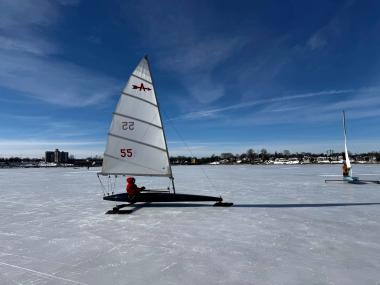
A frozen Navesink River resulting from cold conditions in January allowed for winter recreation, including ice boating by the North Shrewsbury Ice Boat and Yacht Club on February 1st. Photo by Brian Donohue.

Following a cold December and first few days of the month, temperatures rose to above-normal levels through the remainder of the first half of January. Thereafter, a major mid-month atmospheric pattern shift brought Arctic air roaring into the region, and with it several snow events and one of the more persistent cold episodes in recent years lasting through the end of the month. The first 15 days of January averaged 13° milder than the final 16 days. All told, the statewide January average temperature of 28.0° was 3.7° below the 1991–2020 normal. It ranked as the 42nd coldest since NJ...

A mini snowman built in a Clark Township (Union County) front lawn following the December 13th-14th snowfall. Photo courtesy of Dan Zarrow.

The winter season of 2025/2026 took no time to display its wares this past month; it was quick out of the gate. Time will tell whether this was a sign of what lies ahead for the rest of the season. For now, enough cold, wind, and snow arrived this month to remind all that winter in NJ can be a force to be reckoned with. Statewide, the average December temperature of 31.8° was 4.8° below the 1991–2020 normal and ranked as the 43rd coldest since records commenced in 1895. It was New Jersey’s coldest December since 2010 (ranked 29th) and third coldest since 2000 (ranked 18th). The average...

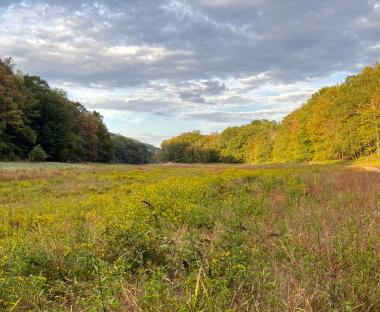
A dry Oak Ridge Reservoir along the Sussex/Morris County border on September 15th when the area was classified in "Moderate Drought" category. Photo courtesy of Alex Burdi.

For the 17th consecutive year, we in the state climate office have evaluated the myriad daily, monthly, and annual observations gathered across New Jersey during the course of the year to choose what we feel were the most significant and impactful 10 weather and climate events of 2025. More about each event can be found in the monthly narratives posted on our website. You might be tempted to rearrange the rankings, particularly as some of the events on the list may have affected you more than others ranked higher. Or perhaps you best recall one that didn't make the list. That's the...

More News

Mild With Some Beneficial Rain: October 2014 Recap
November 3, 2014 - 4:57pm -- Dave Robinson

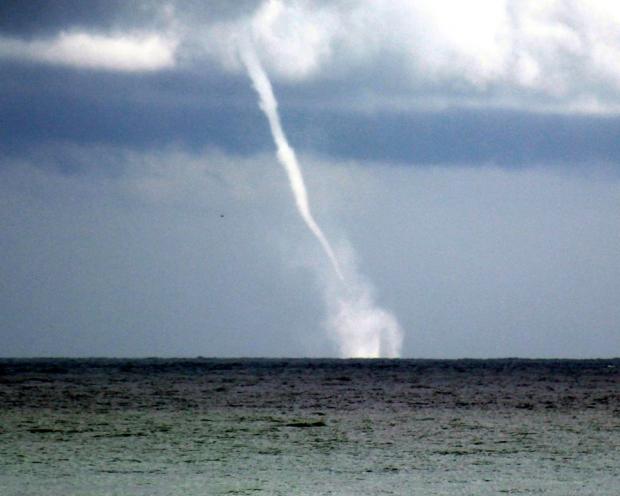
Waterspout photo

The tenth month of 2014 bucked the recent tendency toward dry conditions in northern New Jersey and proved to be the warmest month compared to normal since October 2013. Statewide, the October average temperature of 57.0° was 2.2° above the 1981-2010 average. This ranks as the 23rd warmest (tied with 1955) in 120 years (since records began in 1895). The average precipitation across NJ was 3.78". This is 0.15" below the mean and ranks as the 51st wettest October. Rainfall was above average in what have been some of the driest northern counties since mid summer. Still, from Mercer and Middlesex counties northward, precipitation has only been 50-75% of normal the past three months. Thus this area is still considered "abnormally dry" on the US Drought Monitor map.
El Niño Potential: Fall Impacts

October 15, 2014 - 10:12pm -- Jack McCarty

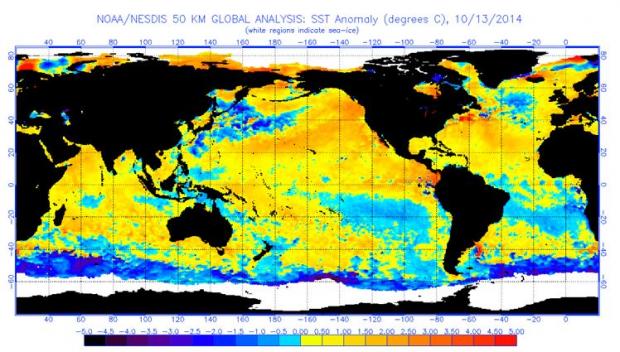
Sea Surface Temperature Anomalies

Early this past summer, we reported on the potential impacts of a developing El Niño event in the tropical Pacific on summertime weather in New Jersey. While El Niños can impact the weather worldwide, we found that New Jersey's weather doesn't fluctuate with an El Niño event. This year's summer (June-August) proved to be rather comfortable, with the statewide average temperature 0.8° below the 1981-2010 average , and precipitation 0.26” above the 1981-2010 average. These mild conditions replicated what we expect out of an El Niño summer. Now we’re back to tell you the story for the fall.

Increasingly Dry in the North: September 2014 Recap

October 6, 2014 - 3:04pm -- Dave Robinson

Dry grass

Combined with below-average precipitation in August, the northern half of New Jersey has become quite dry. Conversely, rainfall has been more common in the south, thus despite a drier-than-average September, the two-month total is slightly above average. Looking first at September, statewide precipitation averaged 2.82". This is 1.25" below the 1981-2010 average and ranks as the 46th driest September since 1895. From Hunterdon, Somerset, and Union counties northward, only 1.49" fell, which is 3.00" below average and ranks as 7th driest. The southern counties averaged 3.47", which is 0.40" below average and ranks as 56th wettest.

Heat Events in New Brunswick: A Climatological Analysis

September 16, 2014 - 1:27pm -- Jack McCarty

Heat wave photo

The summertime in New Jersey is characterized by warm temperatures that give some relief from cold and dreary wintertime conditions. However, amongst pleasant summer days, the atmosphere can align in a way that makes the heat on other days rather unbearable — something that we commonly refer to as a heat wave. Heat waves have a large impact on public health, utilities, infrastructure and more, which is why we often hear the media discussing heat waves across the nation. While heat waves may call for a day at the beach, they're also a cause for public concern.

Comfort Reigns: August and Summer of 2014 Recaps

September 3, 2014 - 5:50pm -- Dave Robinson

Surf photo

A month ago, many NJ residents felt July was quite cool, while in fact it was just 0.4° below the 1981-2010 mean. Such was not the case in August, which truly was on the cool side. The statewide average temperature of 71.0° was 2.4° below average. It ranks as the 32nd coolest since 1895. Even when compared to the 1895-present mean, the month was 1.5° below average. Days with a maximum temperature of 90° or greater were hard to find, certainly a characteristic of the summer of 2014, which will be discussed later in this narrative.

Precipitation varied widely across the Garden State in August, rather typical of a summer month in these parts. Individual station totals ranged from 12.33” in Lacey Township (Ocean County) to 1.01” in Hillsborough (Somerset). When monthly totals from several dozen long-term stations were averaged together, the statewide precipitation was 4.39”. This is 0.18” above the 1981-2010 mean (0.26” below the 1895-present mean) and ranks as the 53rd wettest of the past 120 Augusts. It must be noted that the heavy rain that fell after 8 AM on the 31st is not accounted for in most August station totals. For the monthly state average, only several stations that observe at midnight have their full August 31st totals included, while monthly totals at most other National Weather Service Cooperative stations only run through the morning of the 31st. For more on this observing practice, see the April 2014 report.

New Jersey Hurricane Hunting: A brief recap of a small state’s big hurricane history

August 21, 2014 - 1:35pm -- Tom Karmel

Doria flooding photo

With more than a third of the 2014 Atlantic hurricane season behind us, many may assume this season has been quiet. However, the two hurricanes already named mark the first time since 1992 when the first two named storms have reached hurricane strength and the first time there have been two hurricanes by this date since 2008. With the peak of the tropical season yet to come, the question is whether the heart of the season will be active or quiet. The National Weather Service’s Climate Prediction Center recently updated their seasonal forecast, projecting only a 5% chance of an active season and 70% chance of a less than normal one. Still, it only takes one storm to seriously impact NJ, so we can never let our guard down. With this in mind, here is a brief history of memorable tropical cyclones affecting New Jersey and a summary of the frequency of storms through the hurricane season.

Mid-Atlantic Deluge

August 13, 2014 - 5:40pm -- Dave Robinson

Rainfall estimate map

Extremely heavy rain drenched portions of the Mid-Atlantic during the daytime hours on August 12 until after sunrise on the 13th. Starting off in the Washington-Baltimore area and moving up into central Long Island, a narrow ribbon of rainfall exceeding 5”, and over 10” in a few locales, resulted in flash flooding that resulted in water rescues and many damaged roads and vehicles. Excessively heavy rains, occasionally accompanied by lightning, traveled up a frontal boundary that was associated with an unusually strong August low-pressure system situated over the Great Lakes. The atmospheric impulses riding up this front joined forces with abundant atmospheric moisture (in the top 1% for the region) to bring multiple inches per hour rainfall rates…for multiple hours.

The heaviest rain was situated within less than a 10-mile wide path. Within 20 miles on either side, totals fell off to a mere inch or two, or even less. Such is the nature of these events, where despite the abundant atmospheric moisture, there is a finite amount of water available. The dynamics concentrated the atmospheric lifting, thus the condensation of the majority of the moisture and resultant rainfall, while adjacent areas balanced out the lifted air with subsiding air that greatly limited rainfall totals.

A Rather Average July, Believe It or Not: July 2014 Summary

August 4, 2014 - 6:26pm -- Dave Robinson

Thunderstorm photo

Despite a general feeling amongst NJ residents that July 2014 was a cold summer month, in actuality, compared to long-term records, it was rather average. The statewide average temperature of 74.5° was 0.5° below the 1981-2010 mean. However, it was 0.3° above the 1895-present mean and ranked as the 45th warmest July of the past 119 years. Even the number of afternoons with temperatures of 90° or higher was close to normal. So why the common misperception? Some armchair psychology brings me to four possibilities:

1) The first half of the month was above average, while the more recent weeks were on the cool side. Our perceptions are biased toward the most recent.

2) People have yet to “recover" from the cold start of 2014. The dubious media ramblings of the “polar vortex" returning to the eastern US in mid-July fueled these thoughts.

3) The most recent four NJ Julys all rank in the top six for warmth over the past 119 years. This was an amazing run of hot Julys.

4) Those sticking their toes in the Jersey surf in early July were shocked by water temperatures in the 50°s and may have equated this to the cool July atmosphere. The cold surf was actually indicative of persistent southerly winds that brought atmospheric warmth. This wind flow led to coastal upwelling that pushed warmer surface waters offshore and introduced cool deeper waters to the surf zone.

So this is how a normal July feels...

July 27, 2014 - 8:45pm -- Dave Robinson

Beach sunset photo

Another comfortable mid-summer air mass is destined to invade the Garden State this week. This arrives on the heels of several other mild, dry air masses that have contributed to making this a rather average July in the temperature department. While many may think that this has been an exceptionally cool summer, it has not. However, given that the most recent four Julys all ranked within the top six for heat dating all the way back to 1895, all are forgiven for any misperception!

The overall pattern that has led to temperatures more often being on the cool than than warm side of the ledger since last fall is one of pronounced waviness in the jet stream, with a resultant tendency for a ridge (northward swing) in western North America and a trough (dip in the jet) in the east. This allows cool and dry air to infiltrate our region, with warm and humid air kept at bay to the south. It has also kept the west in severe drought and plenty warm.

Soaking rains keep much of the Garden State green

July 17, 2014 - 10:59pm -- Dave Robinson

Heavy rain photo

The past week has seen localized soaking rains across much of NJ, though not everywhere has gotten clobbered. The map below shows rainfall totals from Sunday morning the 13th through the morning of the 16th. Over this roughly 72 hour interval as much as 8.52” fell in Howell Township (Monmouth County), followed by Belmar (Monmouth) with 7.42”, Wall Township (Ocean) 7.22”, Millstone Township (Monmouth) 5.98”, and Raritan (Somerset) 5.42”. To demonstrate the local variability of the precipitation, four Bridgewater (Somerset) locations received 5.09”, 4.55”, 4.41” and 3.88”. Differences were even more pronounced over distances of several tens of miles. For instance, only 20 miles from Howell, rainfall totaled just 0.89” at Seaside Heights (Ocean) to the south and 2.42” in Rumson (Monmouth) to the north.

Pages

Subscribe to Front page feed