
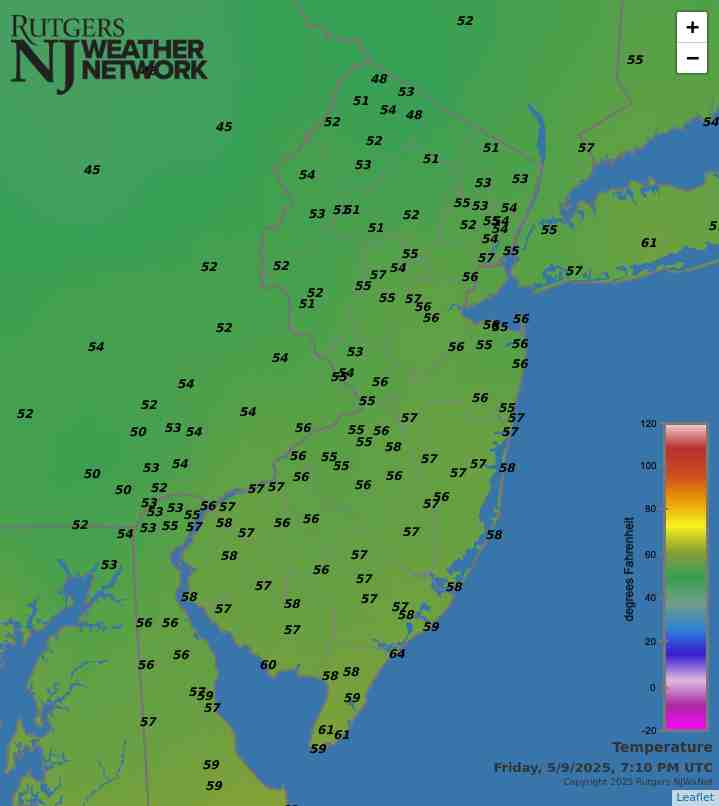



Latest Temperatures

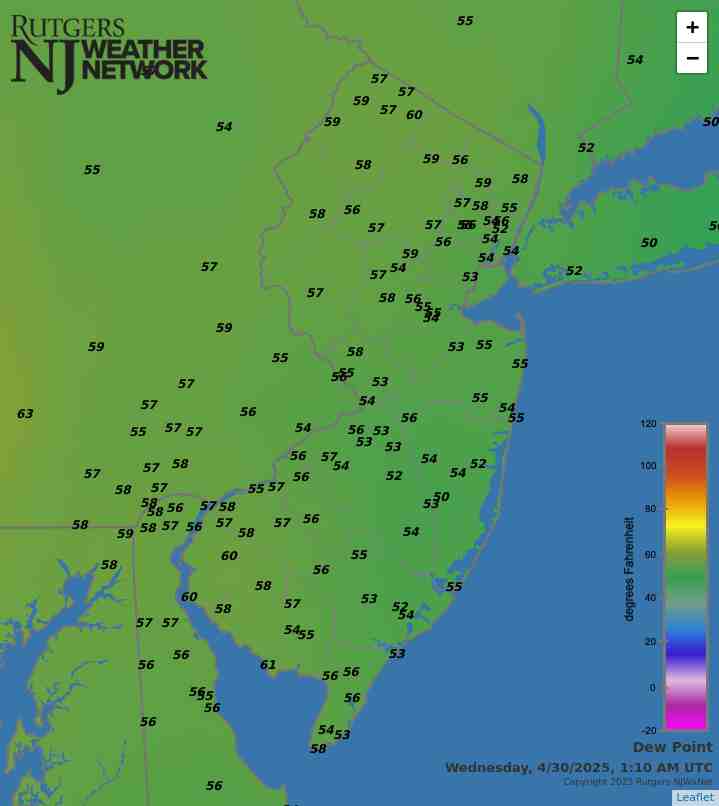
Current Dew Point

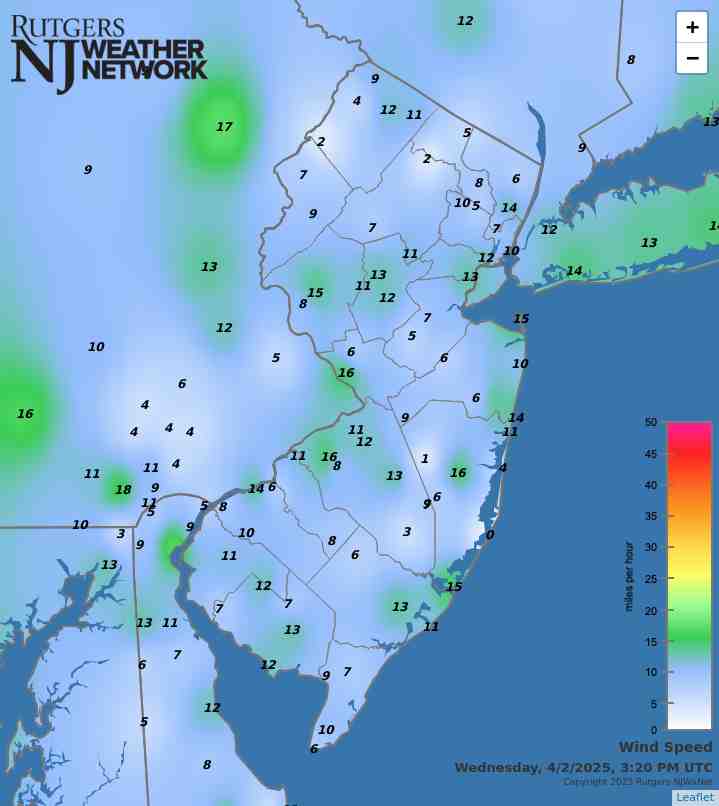
Latest Wind Speeds

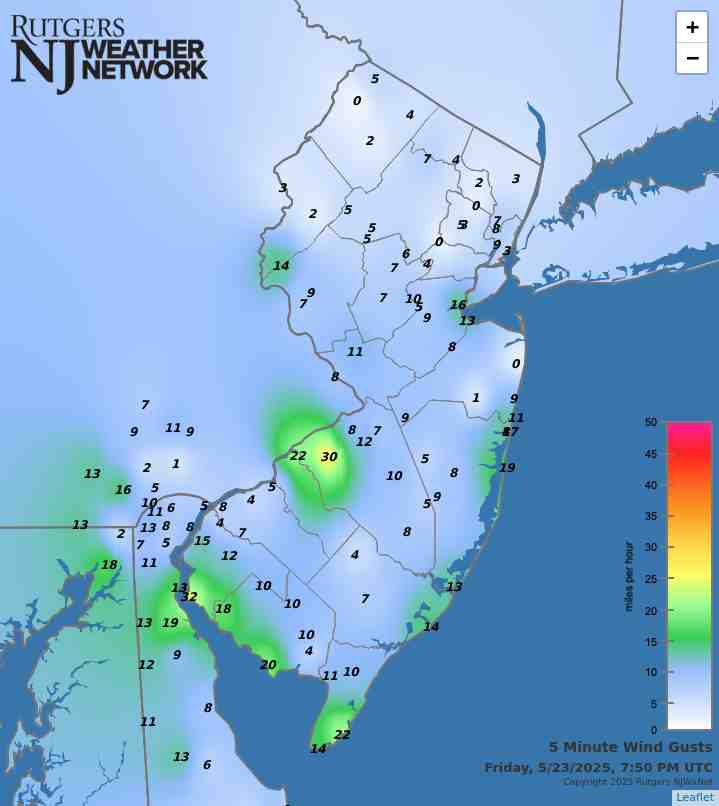
Wind Gusts

Top Story

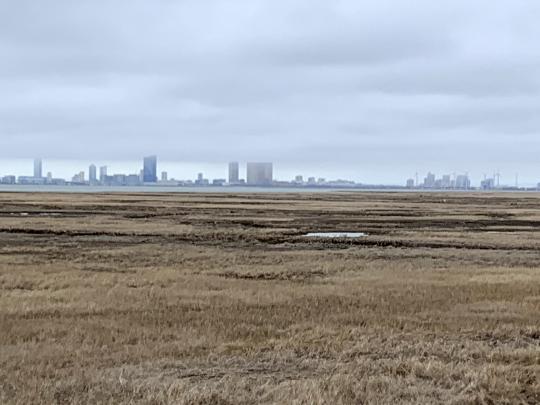
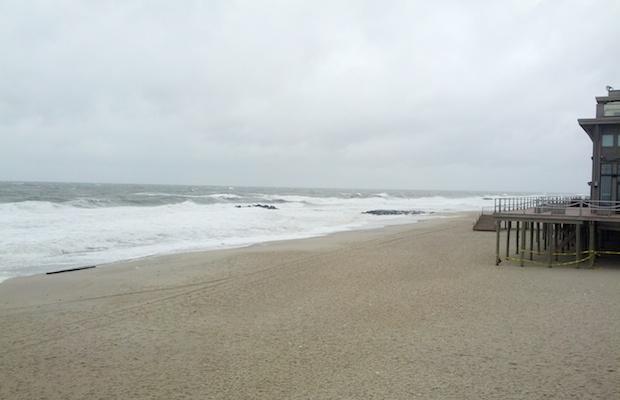
Low clouds hover over Atlantic City as seen from the Forsythe Wildlife Refuge in Galloway Township (Atlantic County) on March 6th. Photo by Dave Robinson.

As is common as winter transitions into spring, this weather/climate shift came in fits and starts this March. Included were some rapid thermal flips, occasional powerful winds, and enough rain in the north to ease drought concerns but well below-normal rain in the south, a region that during winter had been leading the way with beneficial precipitation. The only thing mostly missing, for the third consecutive March, was snowfall, as the persistent snow and ice cover of recent months quickly melted.

With a statewide ranking of 12th warmest, March 2026 is the eighth over the past 26 years to rank in the top 15 with records dating back to 1895. The 45.1° statewide average is 4.1° above the 1991–2020 normal. The average high of 55.9° is 5.0° above normal and ranks 11th mildest. The average low of 34.3° is 3.1° above normal and ranks 14th mildest. Regionally, the northern division averaged 42.9° (+4.1°, 12th mildest), the southern division 46.6° (+4.2°, 12th mildest), and the coastal division 45.9° (+3.7°, 12th mildest).

Statewide, March precipitation averaged 3.28”. This is 0.92” below normal, ranking as the 47th driest on record. The north came in at 4.78” (+0.77”, 30th wettest/103rd driest), the south 2.37” (-1.95”, 21st driest), and the coast 2.24” (-2.18”, 16th driest). The overall below-normal NJ precipitation pattern dates to May 2024, with 20 of the past 23 months below normal. Thus, NJ remained in a NJ Department of Environmental Protection Drought Warning and all of the state was in a stage of moderate drought or abnormal dryness according to the US Drought Monitor at month’s end.

Latest Extremes

City, State Temp
Vineland, NJ 63
Mannington Twp., NJ 63
Woodbine, NJ 63
Hammonton, NJ 63
Mullica Twp., NJ 62
City, State Temp
High Point Monument, NJ 48
Harvey Cedars, NJ 49
Hackettstown, NJ 50
Ramsey, NJ 50
Vernon Twp., NJ 51
most current information as of Apr 13 8:25 AM

Latest Conditions & Forecast

New Brunswick, NJ

Rutgers University Meteorology Program

55°F

Wind

3 mph from the S

Wind Gust

6 mph from the SSW

Partly Sunny
81 °F
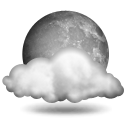
Mostly Clear
59 °F
Mostly Sunny
86 °F
Mostly Cloudy
64 °F
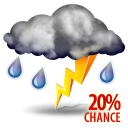
Mostly Sunny then Slight Chance T-storms
89 °F
Chance Showers
65 °F
Partly Sunny
87 °F
Mostly Cloudy
64 °F
Mostly Sunny
82 °F
Mostly Clear
58 °F
Mostly Sunny
79 °F
Chance Showers
55 °F
Chance Showers
76 °F

Today

Partly sunny, with a high near 81. West wind 5 to 15 mph, with gusts as high as 30 mph.

Tonight

Mostly clear, with a low around 59. West wind 5 to 10 mph.

Tuesday

Mostly sunny, with a high near 86. Light southwest wind increasing to 5 to 10 mph in the afternoon.

Tuesday Night

Mostly cloudy, with a low around 64. Southwest wind around 5 mph.

Wednesday

A slight chance of showers between 2pm and 5pm, then a slight chance of showers and thunderstorms after 5pm. Mostly sunny, with a high near 89. Southwest wind 5 to 10 mph. Chance of precipitation is 20%.

Wednesday Night

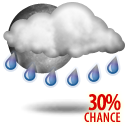
A chance of showers and thunderstorms before 11pm, then a chance of showers between 11pm and 2am. Mostly cloudy, with a low around 65. Chance of precipitation is 30%.

Thursday

Partly sunny, with a high near 87.

Thursday Night

Mostly cloudy, with a low around 64.

Friday

Mostly sunny, with a high near 82.

Friday Night

Mostly clear, with a low around 58.

Saturday

Mostly sunny, with a high near 79.

Saturday Night

A chance of showers. Mostly cloudy, with a low around 55. Chance of precipitation is 30%.

Sunday

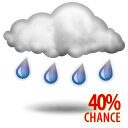
A chance of showers. Mostly cloudy, with a high near 76. Chance of precipitation is 40%.

Search by zipcode or city/state for the latest conditions, forecasts, graphs, maps and more nearest to you.

More News

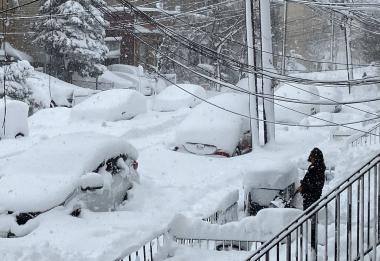
A snowy scene in Jersey City (Hudson County) during the afternoon of February 23rd towards the end of major winter storm.

The adage “wash, rinse, repeat” is an appropriate one when reviewing New Jersey’s weather and climate conditions over this past winter. There were multiple snowstorms and cold spells throughout the season, with below-normal precipitation (rain and melted snow/sleet) in each month as the state continues to experience drought conditions that date back almost two years. All this will be covered in a seasonal overview later in this report. First, a recap of conditions in a February that exemplifies what all months experienced this past winter. The statewide February temperature averaged 29.6...

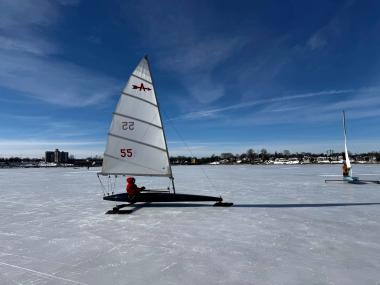
A frozen Navesink River resulting from cold conditions in January allowed for winter recreation, including ice boating by the North Shrewsbury Ice Boat and Yacht Club on February 1st. Photo by Brian Donohue.

Following a cold December and first few days of the month, temperatures rose to above-normal levels through the remainder of the first half of January. Thereafter, a major mid-month atmospheric pattern shift brought Arctic air roaring into the region, and with it several snow events and one of the more persistent cold episodes in recent years lasting through the end of the month. The first 15 days of January averaged 13° milder than the final 16 days. All told, the statewide January average temperature of 28.0° was 3.7° below the 1991–2020 normal. It ranked as the 42nd coldest since NJ...

A mini snowman built in a Clark Township (Union County) front lawn following the December 13th-14th snowfall. Photo courtesy of Dan Zarrow.

The winter season of 2025/2026 took no time to display its wares this past month; it was quick out of the gate. Time will tell whether this was a sign of what lies ahead for the rest of the season. For now, enough cold, wind, and snow arrived this month to remind all that winter in NJ can be a force to be reckoned with. Statewide, the average December temperature of 31.8° was 4.8° below the 1991–2020 normal and ranked as the 43rd coldest since records commenced in 1895. It was New Jersey’s coldest December since 2010 (ranked 29th) and third coldest since 2000 (ranked 18th). The average...

More News

Soaking rains keep much of the Garden State green
July 17, 2014 - 10:59pm -- Dave Robinson

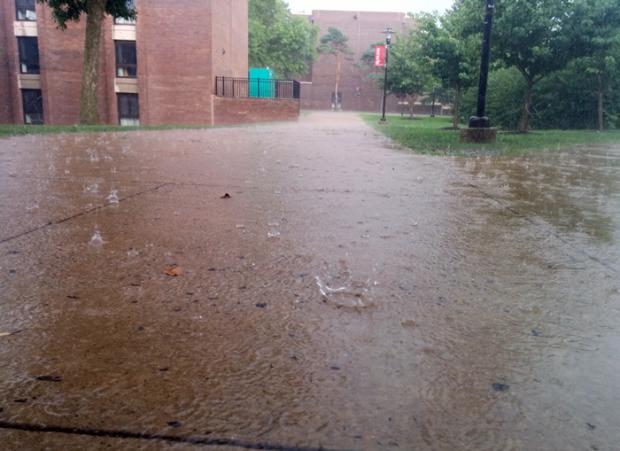
Heavy rain photo

The past week has seen localized soaking rains across much of NJ, though not everywhere has gotten clobbered. The map below shows rainfall totals from Sunday morning the 13th through the morning of the 16th. Over this roughly 72 hour interval as much as 8.52” fell in Howell Township (Monmouth County), followed by Belmar (Monmouth) with 7.42”, Wall Township (Ocean) 7.22”, Millstone Township (Monmouth) 5.98”, and Raritan (Somerset) 5.42”. To demonstrate the local variability of the precipitation, four Bridgewater (Somerset) locations received 5.09”, 4.55”, 4.41” and 3.88”. Differences were even more pronounced over distances of several tens of miles. For instance, only 20 miles from Howell, rainfall totaled just 0.89” at Seaside Heights (Ocean) to the south and 2.42” in Rumson (Monmouth) to the north.
On the Mild and Dry Side: June 2014 Summary and Mid-Year Recap

July 4, 2014 - 5:17pm -- Dave Robinson

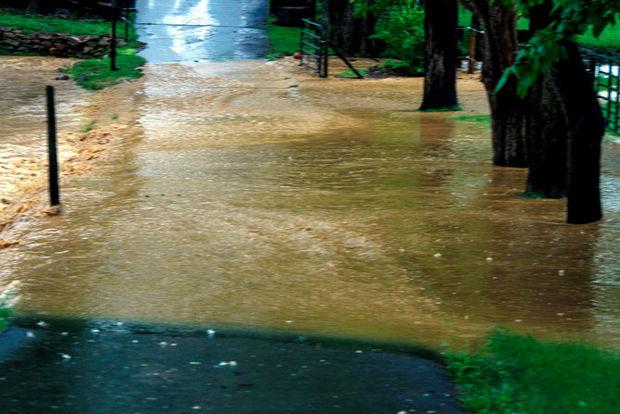
Flood photo in Stewartsville

Statewide, the first six months of 2014 averaged 45.8°. This is 2.2° below normal and ranks as the 31st coolest since 1895. It was the coolest start since 2003, which was 45.0° and ranked 15th. Before then you have to go back to 1982 (45.3°), which ranked 20th. The chilliest was 1907 at 43.2°.

Precipitation (rain and melted snow) averaged 24.76" across NJ from January through June. This total is 2.11" above normal and is 26th wettest. Since 2003, four January-June intervals have been wetter, including last year. 2011 ranked one notch drier at 27th. The wettest first half of the year was 1983 at 32.51".

Heat, Rain, and Tropical Storms: Your Fourth of July Forecast

July 2, 2014 - 2:35pm -- Tom Karmel

Will this 4th of July holiday bring stormy or sunny skies?  (Photo credit: Dan Zarrow, ONJSC, 3/6/13)

The Fourth of July embodies the meaning of summer. Whether on a serene beach in Barnegat Light or in a crowded suburban backyard, New Jerseyans (and all Americans) come together for the day to celebrate our nation through excessive eating, relaxation, fireworks, and sporting the red, white, and blue. We welcome the chance to barbeque with family and friends, and just like any gathering, there is a family member you avoid... Maybe it's the uncle that eats all the food... Or the aunt who chews your ear off with anecdotes... This year, however, you'll have to keep an eye on Mother Nature.

This Friday forecast looms ahead of us with a chance of showers, which is nothing unusual. These storms look as though they should pass around noon, as a cold front advances through our region. However the impending impact of separate tropical system is far from the usual, as Tropical Storm Arthur was officially confirmed Tuesday morning.

As of Wednesday afternoon, Arthur is sitting just off the east coast of Florida and is predicted to accelerate north along the coast reaching Nova Scotia by Saturday. There is a possibility for landfall in North Carolina’s Outer Banks as a hurricane on early Friday morning before turning northeast during the day due to aforementioned front pushing it off the coast. With a bulk of the storm activity on the east side of the circulation, it will most likely not impact our area with rain as it turns away from the coast.

Rutgers in the Big Ten: a tradition of athletics, academics, and WEATHER

June 30, 2014 - 9:53am -- Dan Zarrow

Rutgers University Football Stadium
High Point Solutions Stadium at Rutgers University. (Photo: Wikipedia)

On July 1, Rutgers University officially becomes a member of the Big Ten Conference. In doing so, the Scarlet Knights join thirteen other schools in the Big Ten, bringing with it "new opportunities for academic collaboration and athletic competition."

In addition to a long-standing tradition of outstanding athletics and academics, 10 of the 14 universities in the Big Ten are home to their respective state's climate office. Each state climatologist serves as a focal point for all activities pertaining to the weather and climate of their state. The Office of the New Jersey State Climatologist at Rutgers University is proud to be among some great climatological company in the Big Ten.

In the spirit of that friendly, scholastic competition, we are putting the 14 Big Ten schools head-to-head in a weather and climatology showdown! Which school in which city and which state is the hottest? The coldest? The wettest? The snowiest? Click to find out!

Snow and more snow: 2013-2014 snow season recap

June 19, 2014 - 4:48pm -- Dave Robinson

Snow in Echo Lake Park

The record book on the winter of 2013-2014 officially closes on June 30. Given the recent streak of hot weather, and the summer solstice this Saturday, we're confident it's safe to run the calculations on seasonal snow totals a few days early. Indeed it will be hard for many New Jersey residents to forget this very active, cold, and snowy winter.

From first flake to last, this past season ranked 7th snowiest of the past 120 years. The statewide average snowfall was 54.3”, which is 28.4” (or 210%) above average. The most snow fell up north but ranked lowest of the three regions (14th) due to its normally higher seasonal average. The south had the least snow but ranked 9th highest. This was the third season on record that each of the three divisions recorded over 50"; the other two occurred in 1898-99 and 1957-58. All regions shared the snow load similarly through January. Snow was more plentiful in northern and central areas in February. The situation was reversed, exceedingly so, in March, when three accumulating events impacted the south but missed the other two regions.

A wet week: drenching rains and flash flooding visit opposite corners of the state

June 11, 2014 - 2:44pm -- Dan Zarrow

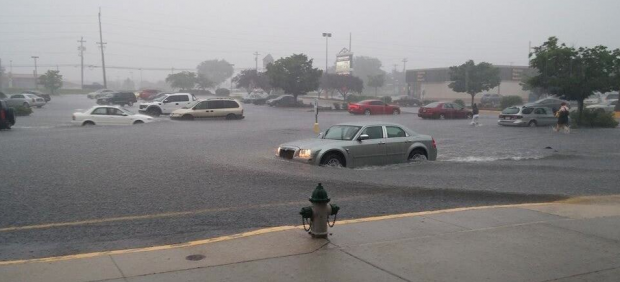
Photo of flash flooding in a parking lot

A steady stream of scattered showers and thunderstorms have brought heavy rain to several locations in New Jersey this week. And even more rain is in the forecast through the end of the week.

The deluge began on Monday morning, as commuters experienced periods of heavy, steady rain through parts of Mercer, Middlesex, Somerset, Union, Morris, Essex, and Bergen counties. The National Weather Service reported severe flash flooding in Newark, which required several motorists to be rescued.

Tuesday afternoon, another area of very heavy rain affected a narrow band in Camden, Gloucester, Burlington, and Atlantic counties. Rainfall estimates from the New Jersey Weather & Climate Network station in Sewell (Gloucester County) totaled almost 2 inches within just a half-hour from 4:30pm to 5:00pm on Tuesday. Widespread flash flooding, over a foot deep in spots, was reported to the National Weather Service by trained storm spotters and officials.

Typical Springtime Variability: May and Spring 2014 Summaries

June 7, 2014 - 1:01pm -- Dave Robinson

Flooding in Newark

May 2014 had a difficult time establishing an identity. What began with a storm that carried over from April 30th and resulted in the 7th largest flood of the past century in the Raritan basin on the 1st (see the April narrative for discussion of this event), later included some warm days, late freezes in a few locations, severe thunderstorms with hail in others, and a spectacular Memorial Day. Overall, May averaged 62.1°, which is 1.3° above average (compared to the 1981-2010 average). This ranks as the 35th warmest (tied with 1962) in the 120 years back to 1895. Precipitation averaged 5.18", which is 1.18" above average and ranks as 19th wettest. This value includes the considerable rain that fell on April 30th at National Weather Service Cooperative Stations that report during the morning hours (see April narrative for a full explanation).

Potential El Niño could impact New Jersey weather this summer

May 30, 2014 - 5:11pm -- Dan Zarrow

Map of impending El Nino

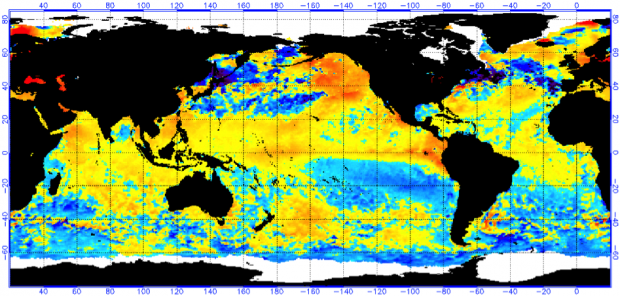
As climatological summer and the Atlantic hurricane season begin on June 1, scientists are carefully monitoring sea-surface temperatures in the tropical Pacific Ocean for a potential El Niño event. An El Niño occurs when warmer-than-average waters start to form in the eastern Pacific Ocean, specifically near the equatorial latitudes. Easterly winds (blowing from the east) typically move warmer water to the western Pacific (near Indonesia), permitting cooler water to upwell to the surface in the east (near South America). When these winds are weaker, or if they reverse direction, the warm water stays in the eastern Pacific. This difference in sea surface temperatures and winds creates a new dynamic between the ocean and atmosphere, distinctly affecting weather patterns across the world. No two El Niño events are alike; they vary in magnitude and location of the largest temperature anomalies. El Niño events can be classified as Strong, Moderate or Weak. What might an El Niño summer mean for New Jersey's weather?

Another End-of-Month Soaker…but First Some Flames: April 2014 Summary

May 10, 2014 - 4:44pm -- Dave Robinson

Wildfire photo

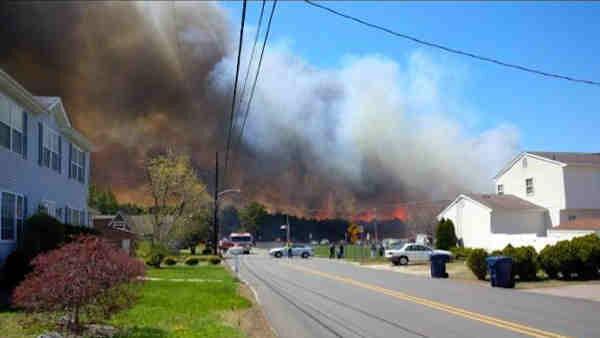
Was it a drier-than-average April? Was it a wetter-than-average April? If only it hadn't rained heavily on the last day of the month! Certainly this is a strange beginning to this monthly weather narrative. Let me explain before we get to the numbers. Most National Weather Service Cooperative observers, of which there are several dozen in New Jersey, take their daily observations in the 7-8 AM time range. So does nearly every NJ CoCoRaHS observer. These observations are recorded for the calendar day at hand, thus a day's weather records are complete as of the observation time. This means that any precipitation that occurs after the daily observation gets recorded the next morning (day). This is something that must be understood when evaluating daily precipitation reports, however, it does not make any difference in monthly totals except on the first and last day of the month. One of these exceptions occurred, in a big way, in April…or was it May?! Torrential rain fell during the daylight hours into the evening of April 30, part of an event that began lightly during the daylight hours of the 29th and ended just after observation time on the morning of May 1st (yes, meaning May 2 observations also were involved in storm totals). What up until then had been a somewhat dry April suddenly became a wet month…if you waited until midnight to take your observations. And believe it or not, some COOP stations do have observations taken at midnight. Confused? Can't blame you…

Heavy rain and flooding plague NJ residents

May 1, 2014 - 6:20pm -- Mathieu Gerbush

Flooding photo

Copious moisture streaming across a slowly advancing warm front resulted in a period of heavy rain across the Garden State, with most of the rainfall occurring on April 30th. The entirety of NJ north of Cape May County was deluged with more than 2.00" of rain, with a large area of greater than 4.00" totals extending from southwest to northeast along the entire span of the state. In particular, the area from western Salem, Gloucester, Camden, Burlington and Monmouth counties north up to roughly I-80 were socked with 4.00"-5.00", with some localized pockets of greater than 5.00". CoCoRaHS stations in Robbinsville Twp (Mercer County) and Matawan (Monmouth) reported the highest totals in the state, with 6.02" and 5.59", respectively. Stations in Medford Twp (Burlington County; 5.44"), New Brunswick (Middlesex; 5.39"), Westfield (Union; 5.32"), and Maplewood Twp (Essex; 5.25") also measured among the heaviest totals in NJ. On the low side, stations in Cape May County such as West Cape May (0.90"), Middle Twp (1.05"), Dennis Twp (1.27"), and Wildwood Crest (1.29") missed out on the heaviest rain.

Pages

Subscribe to Front page feed