
Overview
As is common as winter transitions into spring, this weather/climate shift came in fits and starts this March. Included were some rapid thermal flips, occasional powerful winds, and enough rain in the north to ease drought concerns but well below-normal rain in the south, a region that during winter had been leading the way with beneficial precipitation. The only thing mostly missing, for the third consecutive March, was snowfall, as the persistent snow and ice cover of recent months quickly melted.
With a statewide ranking of 12th warmest, March 2026 is the eighth over the past 26 years to rank in the top 15 with records dating back to 1895 (Table 1). The 45.1° statewide average is 4.1° above the 1991–2020 normal. The average high of 55.9° is 5.0° above normal and ranks 11th mildest. The average low of 34.3° is 3.1° above normal and ranks 14th mildest. Regionally, the northern division averaged 42.9° (+4.1°, 12th mildest), the southern division 46.6° (+4.2°, 12th mildest), and the coastal division 45.9° (+3.7°, 12th mildest).
| Rank | Year | March Avg. Temp. |
|---|---|---|
| 1 | 2012 | 49.8° |
| 2 | 1945 | 48.8° |
| 3 | 1921 | 48.4° |
| 4 | 2016 | 47.0° |
| 5 | 1946 | 46.8° |
| 6 | 2020 | 46.3° |
| 7 | 2010 | 46.2° |
| 7 | 1903 | 46.2° |
| 9 | 2024 | 46.0° |
| 10 | 2025 | 45.8° |
| 11 | 2000 | 45.6° |
| 12 | 2026 | 45.1° |
| 13 | 1977 | 45.0° |
| 14 | 1973 | 44.7° |
| 15 | 1929 | 44.1° |
Table 1. The 15 mildest Marches across NJ since 1895.
Statewide, March precipitation averaged 3.28” (Figure 1). This is 0.92” below normal, ranking as the 47th driest on record. The north came in at 4.78” (+0.77”, 30th wettest/103rd driest), the south 2.37” (-1.95”, 21st driest), and the coast 2.24” (-2.18”, 16th driest). The overall below-normal NJ precipitation pattern dates to May 2024, with 20 of the past 23 months below normal. Thus, NJ remained in a NJ Department of Environmental Protection Drought Warning and all of the state was in a stage of moderate drought or abnormal dryness according to the US Drought Monitor at month’s end.
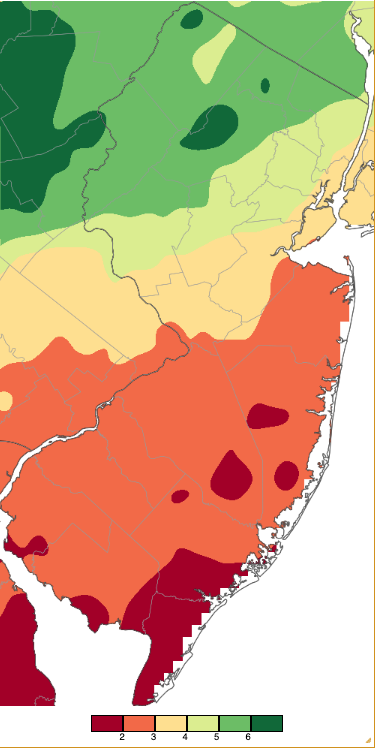
Figure 1. March 2026 precipitation across New Jersey based on a PRISM (Oregon State University) analysis generated using NWS Cooperative, CoCoRaHS, NJWxNet, and other professional weather station observations from 7 AM on February 28th to 8 AM on March 31st. Note the scale in inches at the bottom of the map. Totals range from 1.00”–1.99” (dark red) to 6.00”–6.99” (dark green).
Statewide March snowfall averaged 0.2”. This is 4.4” below normal and ties with six other Marches since 1895 as the 21st least snowy, including 2024 and 2025. The northern snow division came in with 0.1” (-7.3”, 8th least snowy, tied with seven others), the central division 0.0” (-5.4”, tied with 20 other years, including 2024 and 2025), and the southern division 0.4” (-2.3”, 52nd least snowy). A more complete seasonal snow report will be included in next month’s report, however, through March the snow season sits at 37.9” for NJ (+13.1”, 21st snowiest), the north 47.0” (+12.1”, 26th snowiest), central 42.9” (+15.1”, 19th snowiest), and south 30.6” (+12.4”, 20th snowiest).
Precipitation and Storms
The northwest saw the most March rain. Mine Hill Township (Morris County) checked in with the most at 6.85”. This was followed by Mount Arlington (Morris) 6.69”, two Jefferson Township (Morris) stations at 6.56” and 6.55”, West Milford Township (Passaic) 6.54”, and Mount Olive Township (Morris) 6.44”. Down south, the least precipitation in the state was observed at Woodbine (Cape May) with 1.77”. This was followed by both Ocean City (Cape May) and Stafford Township (Ocean) at 1.79”, Linwood (Atlantic) 1.83”, and Cinnaminson Township (Burlington) 1.87”. The most snowfall was the 1.7” at Maurice River Township (Cumberland), then Upper Deerfield Township (Cumberland) 0.8”, and 0.5” at locations in Burlington, Gloucester, Morris, and Somerset counties.
A modest mixed bag of precipitation consisting of rain, snow, and sleet, with some freezing rain icing the highest elevations in the northwest, kicked off March on the 3rd. Woodbridge Township (Middlesex) and Montague Township (Sussex) each at 0.55” saw the most precipitation (rain/melted snow/sleet), with 0.50”–0.53” at seven Community Collaborative Rain, Hail, and Snow (CoCoRaHS) stations. Montague Township and Rockaway Township (Morris) each picked up 0.3” of snow.
The wettest event of the month began before dawn on the 5th with drizzle during the day followed by rain and even some scattered thunderstorms in the evening before ending as rain and drizzle the morning of the 6th. Geographically, rainfall totals were rather similar to the monthly distribution (Figure 2). Westfield (Union) came out on top with 2.08” followed by Cranford Township (Union) 2.07”, both Lebanon (Hunterdon) and Bernards Township (Somerset) 1.98”, and Chester Township (Morris) 1.96”. Of the 234 CoCoRaHS observations, 137 caught from 1.00”–1.91” and 33 from 0.50”–0.99”. Millville (Cumberland) at 0.08” saw the least.
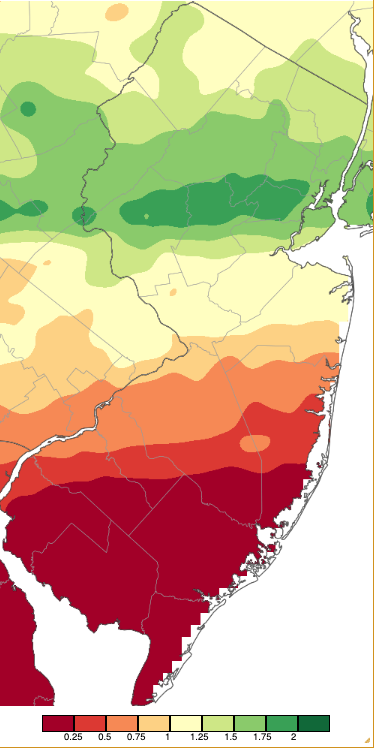
Figure 2. Precipitation across New Jersey from 7 AM on March 4th through 7 AM March 7th based on a PRISM (Oregon State University) analysis generated using NWS Cooperative, CoCoRaHS, NJWxNet, and other professional weather station observations. Note the scale in inches beneath the map.
The next event was a turbulent one beginning as afternoon showers on the 11th before lines of thunderstorms ripped through the state during the evening. Rain ended close to dawn on the 12th before post-cold frontal rain mixed with snow and sleet that afternoon, particularly in the south. Top precipitation totals included two sites in Jefferson Township with 1.46” and 1.35”, Lopatcong Township (Warren) 1.35”, West Milford Township 1.33”, and Sparta Township (Sussex) 1.31” (Figure 3). Twenty-five of the 249 CoCoRaHS observations came in from 1.00”–1.29” and 117 from 0.50”–0.99”. Neptune Township (Monmouth) with 0.08” saw the least. Upper Deerfield Township received 0.8” of snow, Maurice River Township 0.7”, and 0.5” fell at several locations in Atlantic, Burlington, Gloucester, and Somerset counties.
Strong winds accompanied the frontal passage on the 11th with gusts at NJWxNet stations as high as 54 mph at Upper Deerfield Township, South Harrison (Gloucester) 45 mph, and 41 mph in Lower Alloways Creek Township (Salem) on the 11th. This brought down trees and wires, resulting in some power outages mostly in Gloucester, Camden, Burlington, Salem, and Morris counties. Behind the front, winds gusted on the 12th to 48 mph at High Point Monument (HPM; Sussex), Wantage (Sussex) 46 mph, and 41–42 mph at five NJWxNet locations. Slow to fully calm, the 13th saw a 43-mph gust at Fortescue (Cumberland), and on the 14th, a 48-mph gust at Sea Girt (Monmouth), Lower Alloways Creek Township 47 mph, and 40–45 mph at seven NJWxNet stations.
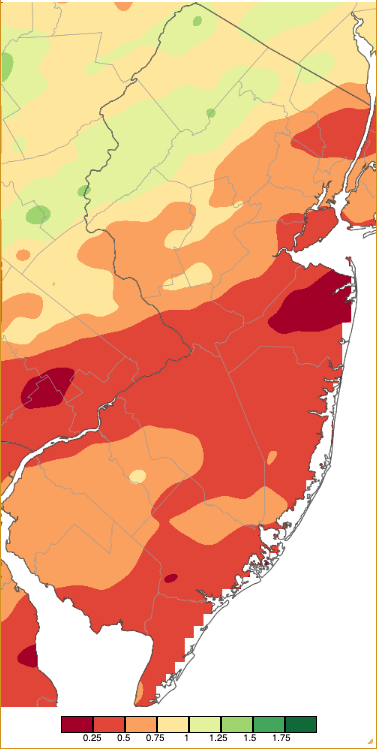
Figure 3. Precipitation across New Jersey from 8 AM on March 11th through 8 AM March 13th based on a PRISM (Oregon State University) analysis generated using NWS Cooperative, CoCoRaHS, NJWxNet, and other professional weather station observations.
Rain resumed during the pre-dawn hours of the 16th, ending early on the 17th following the passage of a strong squall line. Top totals included West Milford Township 1.54”, Butler (Morris) 1.39”, Denville Township (Morris) 1.36”, and 1.33” in both Mount Arlington Township and Vernon Township (Sussex; Figure 4). Twenty-five CoCoRaHS station caught 1.00”–1.31” and 185 from 0.50”–0.99”. Statewide tree and powerline damage with resultant power outages resulted from winds that gusted at high as 71 mph at Newark-Liberty Airport in Elizabeth (Union) early on the 17th. Late 16th gusts rose to 66 mph at Lower Alloways Creek Township, Upper Deerfield Township 59 mph, 50–57 mph at 12 NJWxNet stations, and 40–49 mph at 12 others. Other early 17th gusts included 62 mph at Harvey Cedars (Ocean), 52–56 mph at four locations, and 40–46 mph at 13 other NJWxNet sites.
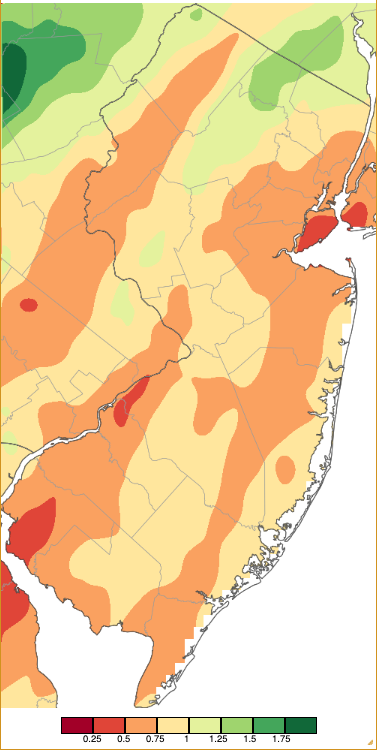
Figure 4. Precipitation across New Jersey from 8 AM on March 15th through 8 AM March 17th based on a PRISM (Oregon State University) analysis generated using NWS Cooperative, CoCoRaHS, NJWxNet, and other professional weather station observations.
The fourth inch plus rain event of the month commenced during the evening of the 22nd, continuing the morning of the 23rd. Primarily a northwest episode, Franklin (Sussex) came in with 1.51”, Sparta Township 1.47”, and 1.44” in Mine Hill Township, Mount Olive Township, and West Milford Township (Figure 5). Fifty-eight stations reported 1.00”–1.43” and 46 from 0.50”–0.99”. Winds gusted to 40 mph at Little Egg Harbor Township (Ocean) on the 22nd, and on the 23rd to 44 mph at HPM and 42 mph at both Harvey Cedars and Fortescue.
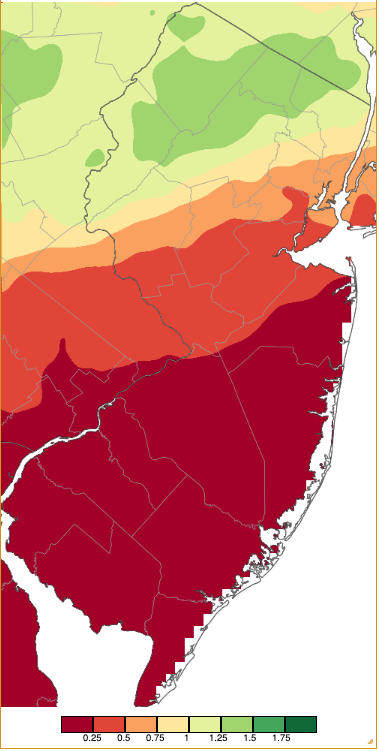
Figure 5. Precipitation across New Jersey from 8 AM on March 22nd through 8 AM March 24th based on a PRISM (Oregon State University) analysis generated using NWS Cooperative, CoCoRaHS, NJWxNet, and other professional weather station observations.
A modest rainfall event closed the month, moving into the northwest late on the 26th before ending across the state on the morning of the 27th. Lopatcong Township caught 0.51”, Franklin Township (Warren) 0.44”, and Pittsgrove Township (Salem) 0.42”.
The peak barometric pressure during March was in the 30.60”–30.70” range on the 2nd. Lowest pressures were observed on the 16th at 29.15”–29.30”. All eight days with gusts exceeding 40 mph at one or more NJWxNet stations have been mentioned above.
The US Drought Monitor map of March 31st showed improvement from the start of the month in north and central areas, especially in the northwest where conditions had been driest (Figure 6). Northern reservoir levels rose from a March 1st capacity of approximately 50% to 85% at month’s end. The interior south showed some improvement, except remained stable with moderate drought in the southwest. The eastern half of the south showed improvement through the first half of the month, with even abnormally dry conditions disappearing in some locations. However, the ongoing dry pattern led to a reinstatement of abnormally dry conditions in the east to end the month with minor wildfires occurring along the 195 corridor in the Jackson Township (Ocean) on the 30th.
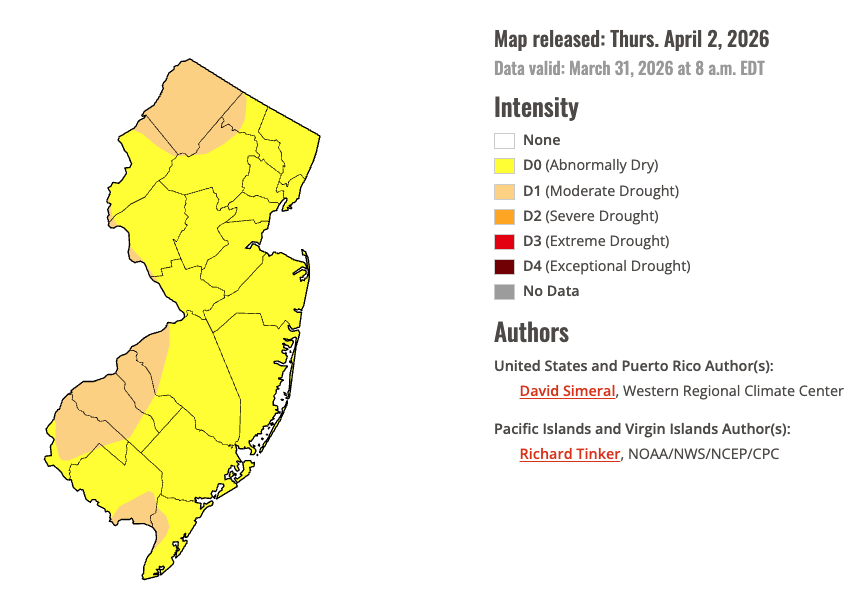
Figure 6. U.S. Drought Monitor map of conditions in NJ as of March 31, 2026.
Temperature
The thermometer zipped up and down in yoyo-like fashion during March. On ten days high temperatures at some of the 70 NJWxNet stations exceeded 70°, while on seven days low temperatures of 20° or colder were recorded at some locations. There were two mornings where all NJWxNet stations bottomed out below freezing, while on seven days none fell to freezing. There were not any days where highs remained below freezing at all sites, while 28 days found highs above freezing at every station.
Looking at 70° plus days, the first was on the 8th, with eight locations up to 73° and 28 from 70°–72°. At a number of these locations this was the first high of 2026 milder than the 50°s, with the atmosphere zipping right past the 60°s. The next four days found many locations above the 70° mark. Hammonton (Atlantic) and Piney Hollow (Gloucester) reached 77° and 53 stations from 70°–76° on the 9th. The 10th was the warmest day of the month. Highs of 84° were reached at Cherry Hill (Camden), Hammonton, and Red Lion (Burlington), 80°–83° at 41 stations, and 70°–79° at 17 sites (Figure 7). A sea/bay breeze kept the high to 60° at both Harvey Cedars and Fortescue. The sea breeze thermal impact is clearly visible during the afternoon of the 10th, with temperatures differing by over 30° from coastal stations to those just several miles inland (Figure 8).
The Newark-Liberty Airport high of 82° on the 10th was a record for the date, exceeding the 81° high on March 10, 2016. The Atlantic City Airport in Pomona (Atlantic) high of 80° on the 10th tied with an 81° high in 2016 as the earliest 80° reading of the year on record. It was the second earliest 80° high at Trenton-Mercer County Airport in Ewing Township (Mercer; 80° on March 9, 2016, remains the record). Diurnal temperature ranges on the 10th were impressive at many locations, but none more so than the 53° range at Walpack (Sussex) where the morning low was 28° and afternoon high 81°. Ranges of 50° were observed at Pequest (Warren, 31°/81°), Hillsborough-Duke (Somerset, 32°/82°), and Hopewell Township (Mercer, 32°/82°).
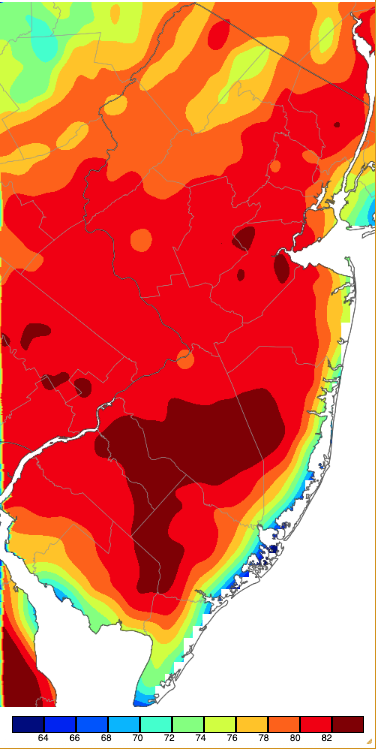
Figure 7. Maximum temperatures on March 10th based on a PRISM (Oregon State University) analysis generated using NWS, NJWxNet, and other professional weather stations.
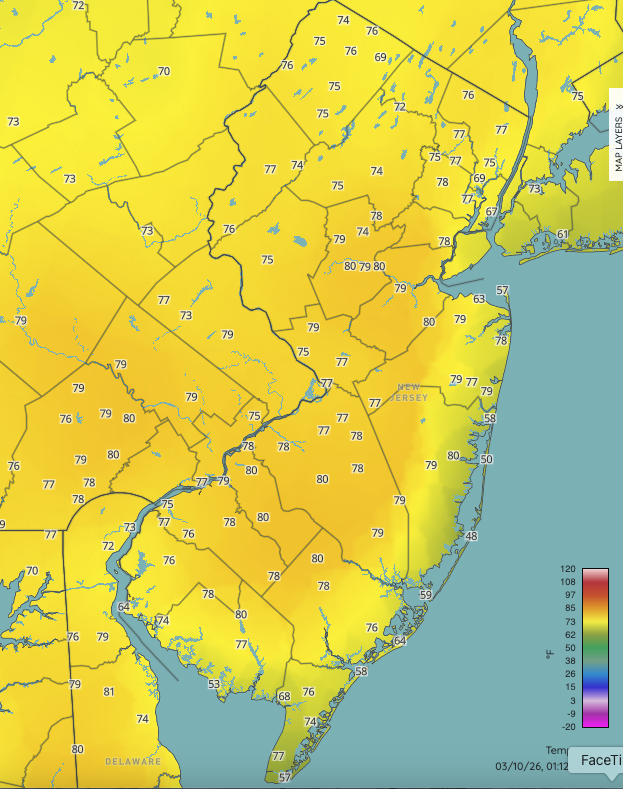
Figure 8. Temperatures across the region on March 10th at 1:10PM. Includes observations from NJWxNet, NWS, DEOS, Shrewsbury, and NJDOT RWIS networks.
The 11th was not quite as warm as the 10th across NJ, yet the monthly high of 85° was reached at Hammonton. Highs of 80°–84° were found at 33 stations and 70°–79° at 24 others. Meanwhile, both Atlantic City Marina (Atlantic) and West Cape May (Cape May) topped out at just 57°. The early-season warm spell ended on the 12th when Mannington (Salem) reached 75° and nine stations were from 70°–74°.
The 22nd found eleven sites at 76°and 30 from 70°–75°. The last week of the month found four days with highs above 70°. On the 26th, Fort Dix (Burlington) rose to 80° and 62 NJWxNet stations from 70°–79°. West Deptford (Gloucester) reached 72° on the 27th, with 19 other stations either 70° or 71°. Four sites hit 74° and 47 from 70°–73° on the 30th. The month ended on a warm note, with Sicklerville (Camden) and Woodland Township (Burlington) each 83° on the 31st, with 44 stations from 80°–82° and 19 from 70°–79°. Cool ocean and bay waters remained, leaving Harvey Cedars with a high of just 60°. The sea breeze impact on the thermometer can quickly wax and wane at coastal stations due to just a minor change in wind direction or speed. This was evident at Sea Girt on the 30th into the 31st where the evening and early morning temperature variations were more a function of wind speed, while the rapid afternoon swings of almost 30° were associated with shifts in direction (Figure 9).
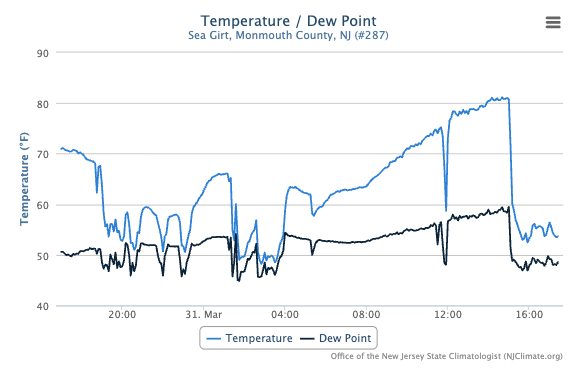
Figure 9. Temperature and dew point temperature observations every five minutes at the Sea Girt NJWxNet station from approximately 5:30 PM March 30th to 5:30 PM March 31st.
March began on a cold note, with snow remaining on the ground in central and especially northern areas. Lows on the 1st fell to 20° or lower at high elevation NJWxNet stations including HPM 15°, High Point (Sussex) 18°, Vernon Township 19°, and Wantage 20°. The 2nd was the coldest day of the month. HPM and High Point both dipped to 9°, six stations were 11°–15°, and 15 from 16°–20° (Figure 10). All NJWxNet stations fell below freezing, the mildest being 29° at West Cape May. The high on the 2nd only reached 28° at HPM and was from 30°–32° at 13 stations, the network maximum being 40° at Fortescue. HPM and three other sites topped out at 31° or 32° on the 3rd, with the morning low down to 17° at Sandyston (Sussex) and 18°–20° in seven other locations.
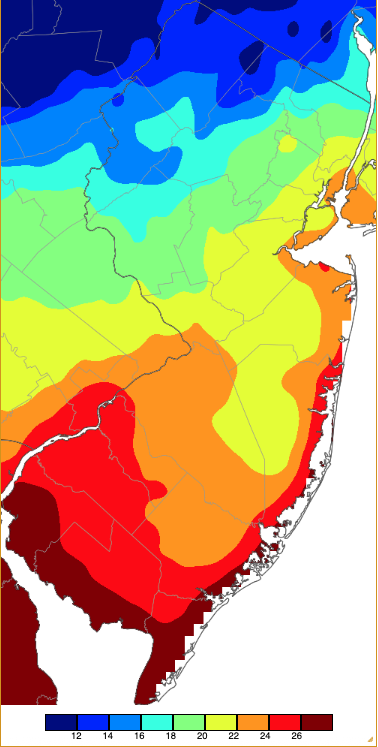
Figure 10. Minimum temperatures on March 3rd based on a PRISM (Oregon State University) analysis generated using NWS, NJWxNet, and other professional weather stations.
Cold air returned on the 13th with Walpack down to 20°. HPM fell to 19° on the 17th. The 18th found HPM down to 13°, Walpack 14°, and 15 locations from 16°–20°. West Cape May was mildest at 29° on what was possibly the last morning of the season with all NJWxNet stations bottoming out below freezing. The HPM high was only 29° and Vernon Township 32° on the 18th, in this case likely the last freezing highs of the season at a NJ location. Wedged between mild days to end the month, HPM dropped to 16°, High Point 19°, and Vernon Township 20° on the 28th, when Atlantic City Marina was least cold at 35°. On the 29th, Walpack sat at 16° for a low, Berkeley Township (Ocean) 17°, and eight other NJWxNet stations from 18°–20°, with Seaside Heights (Ocean) least cold at 36°.