
 May Overview
Spring is often recognized as a period when winter attempts to hold on while summer comes knocking on the door. This past March and April displayed this “battle"...to the extreme. May also followed suit. The focus was mainly on thermal swings, resulting in many a decision on whether to go with cold or warm weather clothing. Meanwhile, the ongoing poor “production” of precipitation was disappointingly more persistent, except, unfortunately, over the Memorial Day weekend. First will be a recap of May conditions, followed by a spring overview.
Statewide, May precipitation averaged 2.88” (Figure 1). This is 0.87” below the 1991–2020 norm and ranks as the 42nd driest May of the past 132 years. The northern climate division averaged 3.07” (-0.95”, 38th driest), the southern division 2.80” (-0.80”, 46th driest), and the coastal division 2.41” (-1.10”, 37th driest). This was the 10th consecutive month with below-normal precipitation across NJ and the 22nd of the past 25 months. More on the long-term drought conditions in the spring section of this report.
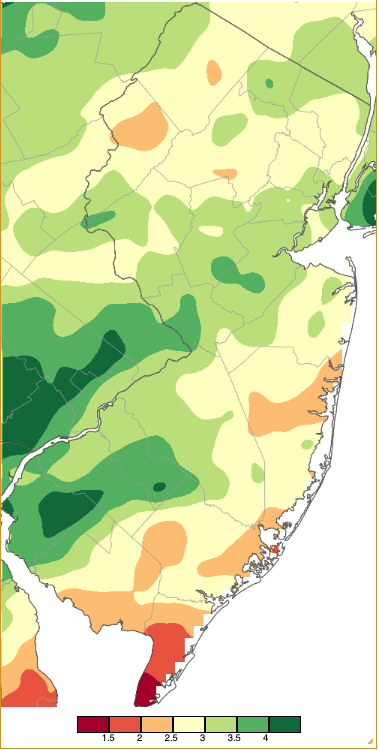
Figure 1. May 2026 precipitation across New Jersey based on a PRISM (Oregon State University) analysis generated using NWS Cooperative, CoCoRaHS, NJWxNet, and other professional weather station observations from 8 AM on April 30th to 8 AM on May 31st. Note the scale in inches at the bottom of the map. Totals range from 1.00”– 1.49” (dark red) to 4.00”– 4.49” (dark green).
May temperatures vacillated weekly, ultimately coming in at an average of 61.7°. This is 0.5° above normal and ranks as the 39th mildest may since 1895. The average maximum temperature of 72.4° is 0.1° above normal, ranking 54th mildest. The average minimum of 51.0° is 0.8° above normal, ranking 25th mildest. The north came in at 60.0° (+0.1°, 46th mildest), the south 62.8° (+0.6°, 36th mildest), and the coast 62.2° (+1.2°, 25th mildest).
Precipitation and Storms
As noted in Figure 1, a swath from the southwest to northeast received the most May rainfall, while southern coastal areas and Warren County saw the least. Leading the way on the wet side was Woodstown (Salem County) with 4.65”, followed by Monroe Township (Gloucester) 4.43”, Pitman (Gloucester) 4.35”, West Milford Township (Passaic) 4.10”, Ewing Township (Mercer) 4.07”, Evesham Township (Burlington) 3.96”, Holland Township (Hunterdon) 3.83”, and Hillsborough Township (Somerset) 3.80”. On the dry end, two Lower Township (Cape May) gauges caught just 1.44” and 1.73”, two Middle Township (Cape May) sites 1.53” and 1.72”, Hamilton Township (Atlantic) 1.61”, two Dennis Township (Cape May) sites 1.68” and 1.92”, and Brigantine (Atlantic) 1.92”.
Six rain events during the month found a station accumulating ≥ 0.50”. The first was afternoon rain on the 6th that ended in the pre-dawn hours of the 7th. Long Hill Township (Morris) was tops at 0.93”, followed by New Providence (Union) 0.84”, Far Hills (Somerset) 0.82”, Springfield Township (Union) 0.76”, and 17 of the 269 Community Collaborative Rain, Hail, and Snow Network (CoCoRaHS) reports from 0.50”–0.75”.
Light rain fell in spots from the afternoon of the 8th to pre-dawn on the 10th. Long Branch (Monmouth) received the most with 0.52”, while Mine Hill Township (Morris) reported 0.51”. Showers resumed during the second half of the 10th, persisting through the morning of the 11th. Three Hammonton (Atlantic) gauges caught 0.65”, 0.53”, and 0.44”, and Bordentown (Burlington) received 0.57”. Monroe Township and Barrington (Camden) reported pea-size hail.
Scattered afternoon showers on the 20th were followed by an early-evening line of thunderstorms crossing the state. Of 270 CoCoRaHS reports, Lacey Township (Ocean) at 1.01” saw the most, followed by Greenwich Township (Gloucester) 0.94”, Evesham Township 0.76”, Salem Township (Salem) 0.76”, and 34 stations from 0.50”–0.75”. Thunderstorms produced hail that was as large as 0.7” in diameter in Toms River (Ocean), 0.5” in Hamilton Township (Mercer), and 0.4” in Lacey Township. Winds gusted to 50 mph at both the Cream Ridge (Monmouth) and East Brunswick (Middlesex) Rutgers NJ Weather Network (NJWxNet) stations, and from 40–49 mph at ten of the other NJWxNet sites. There was tree and wire damage reported in several central counties.
Next, a long-duration precipitation event delivered by far the largest totals of the month. Rain commenced in the south on the evening of the 22nd, becoming statewide during the 23rd, and heavy on the 24th, before ending in the pre-dawn hours of the 25th. Event totals included 2.66” in Hawthorne (Passaic), West Milford 2.52”, Harrison (Hudson) 2.48”, Helmetta (Middlesex) 2.45”, Pitman 2.33”, and Medford Township (Burlington) 2.27” (Figure 2). All told, 54 of 260 reports were from 2.00”–2.66”, 192 from 1.00”–1.99”, and 15 from 0.71” (Brigantine) to 0.99”. On the 23rd, winds gusted to 44 mph at Little Egg Harbor Township (Ocean) and 40 mph at Harvey Cedars (Ocean).
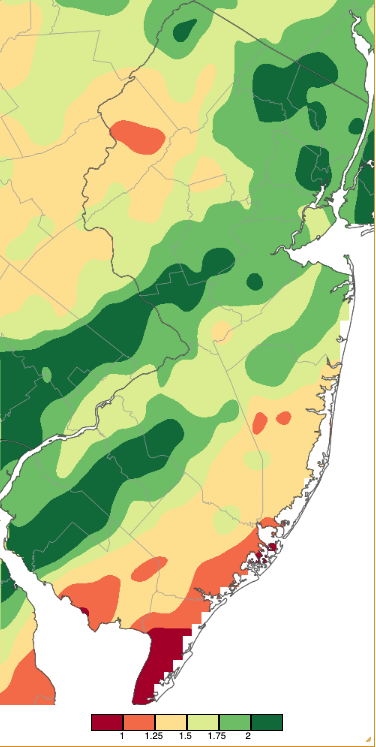
Figure 2. Precipitation across New Jersey from 8 AM on May 23rd through 8 AM May 26th based on a PRISM (Oregon State University) analysis generated using NWS Cooperative, CoCoRaHS, NJWxNet, and other professional weather station observations. Note the scale in inches at the bottom of the map.
The final precipitation of the month fell during the morning and afternoon of the 27th, including some afternoon thunderstorms in eastern Atlantic County. Linwood (Atlantic) received 2.05”, Ventnor City (Atlantic) 1.92”, two Somers Point (Atlantic) stations 1.50” and 1.43”, Millville (Cumberland) 1.31”, and Monroe Township 1.19”. Of 252 CoCoRaHS reports, only 12 were from 0.50”–0.90”, illustrating the localized nature of the heavier rain.
The drought situation deteriorated during the month in the south, with all but extreme western Salem County in Severe Drought (D2) at month’s end according to the U.S. Drought Monitor (Figure 3). The remainder of the state remained in Moderate Drought (D1) throughout May.
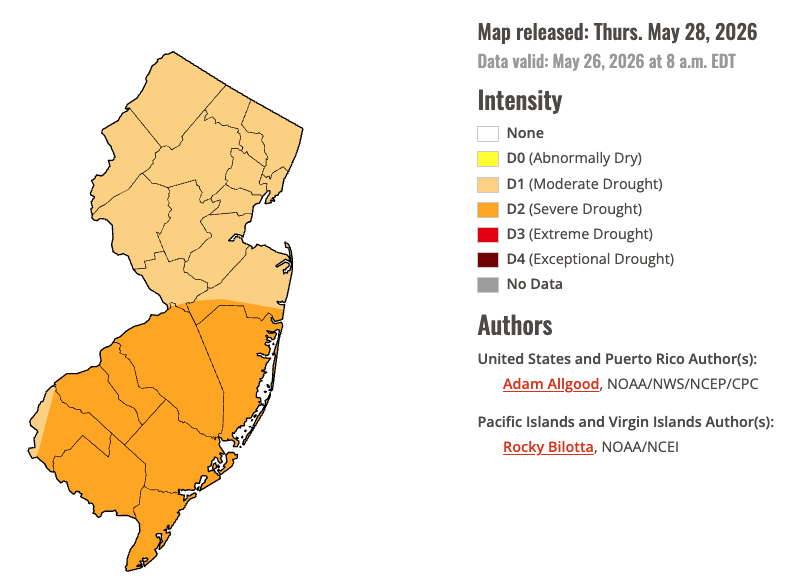
Figure 3. U.S. Drought Monitor map of conditions in NJ as of May 26, 2026.
The highest barometric pressure of the month was 30.40”–30.50” on the 23rd. The lowest was 29.65”–29.75” on the 30th. In addition to the two earlier mentions of 40 mph or greater gusts, gusts on the 5th reached 46 mph at Little Egg Harbor Township and 44 mph in Harvey Cedars, 45 mph at Little Egg Harbor Township on the 13th, 41 mph in Pennsauken (Camden) on the 19th, and at Little Egg Harbor Township, 42 mph on the 28th and 43 mph on the 30th.
Temperature
Illustrating the roller coaster ride of temperatures across New Jersey in May, there were 12 days when highs were ≥80° at one or more NJWxNet station, while 10 days had lows from 29°–39°. Two days (16th and 31st) had stations with highs ≥80° and lows ≤39°.
First looking at minimums, the 1st found Walpack (Sussex) down to 30°, with 19 stations from 33°–39°. High Point Monument (Sussex) fell to 37° on the 2nd and 33° on the 3rd, when ten stations were 35°–39°. Walpack and Sandyston (Sussex) reached 31° and Pequest (Warren) and Hackettstown (Warren) 32° on the 4th, with six locations 33°–39°. Hackettstown and High Point Monument dropped to 36° on the 8th, with 13 locations from 37°–39°.
Looking south, Berkeley Township (Ocean) took low honors at 38° and Woodbine (Cape May) 39° on the 11th. The 12th was the coldest day of May (Figure 4). Walpack chilled to 29°, Sandyston 30°, Pequest 32°, and 23 NJWxNet stations from 34°–39°. On the milder side, Lower Alloways Creek Township (Salem) only dropped to 51°. Walpack reached 39° on the 13th, and Sandyston 38° and three other sites 39° on the 16th. The month ended on a chilly note, with lows on the 31st of 34° in Walpack and 35°–39° at 11 locations.
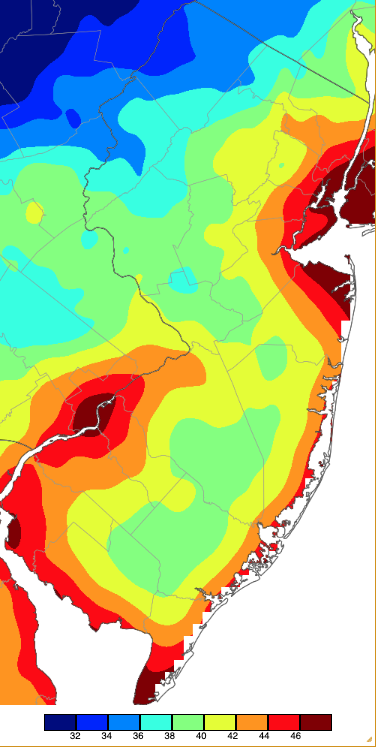
Figure 4. Minimum temperatures on May 12th based on a PRISM (Oregon State University) analysis generated using NWS, NJWxNet, and other professional weather stations. Note the 2-degree scale beneath the map.
The 80°s were first reached on the 5th, with six stations at 86° and 48 others from 80°–85°. Hammonton and Piney Hollow (Gloucester) hit 85° on the 10th, with 21 sites from 80°–83°. The 16th–20th was one of the hottest five-day stretches of May weather on record across the Garden State. Piney Hollow, Sicklerville (Camden), and Upper Deerfield (Cumberland) reached 85° on the 16th, with 44 stations from 80°–84°. The 90°s were reached on the 17th, with Berkeley Township, Toms River, and Woodland Township (Burlington) at 92°, 17 stations 90°–91°, and 47 at 80°–89°. Moorestown (Burlington), Piney Hollow, and Red Lion (Burlington) soared to 98° on the 18th, with 49 sites at 90°–97° and 14 from 80°–89°. Atlantic City Marina (Atlantic) was coolest at 77°. High Point Monument, where sometimes multiple years passed between 90° readings, reached 90°. The Monument exceeded that mark on the 19th at 91°, a day that was arguably tied with or was a close second warmest May day since record keeping commenced in the mid 1890s. It rivals May 31, 1895, when Paterson (Passaic) reportedly reached 102° and Indian Mills (Burlington) 99°. This year, the National Weather Station in Harrison reported a 100° maximum, while five NJWxNet stations (Berkeley Township, Hammonton, Moorestown, Toms River, Woodland Township) and Newark Airport in Elizabeth (Union) hit 99° (Figure 5). 54 NJWxNet stations reached 90°–98° and six 80°–89°. A sea breeze kept Atlantic City Marina to a high of 71°. The Newark Airport observation tied for this location’s hottest May afternoon on record.
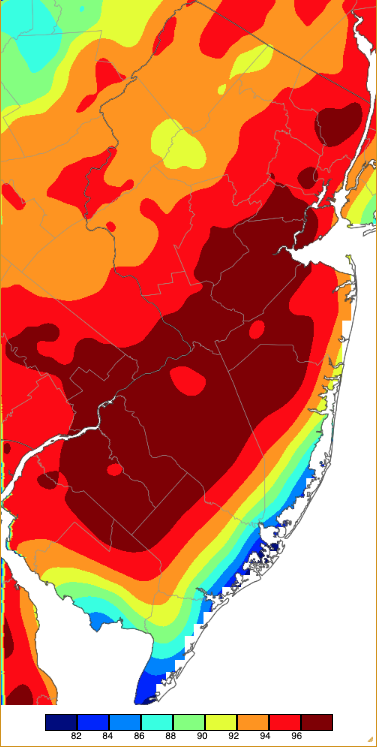
Figure 5. Maximum temperatures on May 19th based on a PRISM (Oregon State University) analysis generated using NWS, NJWxNet, and other professional weather stations.
The 20th continued the hot streak, with Toms River and Woodland Township again peaking at 99°, 56 stations from 90°–98°, and the remaining NJWxNet stations between 81° (Fortescue, Cumberland County) and 89°. It took until midafternoon for a sea breeze to become established at coastal locations. Before the breeze’s 2 PM arrival, the temperature at Sea Girt (Monmouth) sat in the low 90°s (Figure 6). Within minutes of the breeze onset, the temperature fell into the upper 60°s. Also, note that an offshore breeze arrived before dawn, raising the temperature to near 80° after mostly being in the 60°s late during the previous torrid (inland) afternoon and into the night on the 19th.
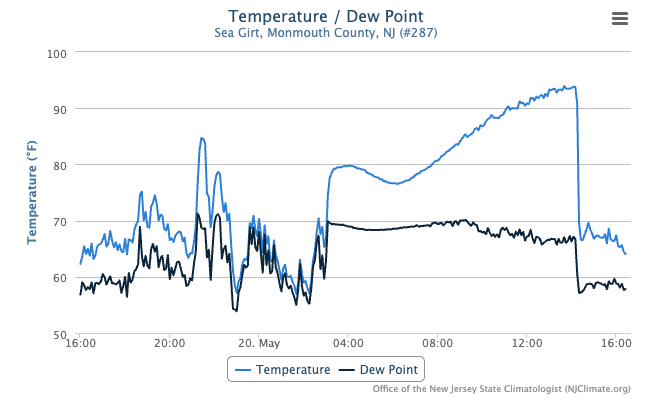
Figure 6. Time series of air temperature and dew point at the Sea Girt NJWxNet station from 4 PM May 19th to 4:30 PM May 20th.
The last week of May saw high temperatures into the 80°s. New Brunswick (Middlesex) reached 85° on the 26th, with 45 stations from 80°–84°. Walpack led the way at 87° on the 27th, with 52 stations from 80°–86°. Berkeley Township, Cape May Court House (Cape May), and Woodbine reached 82°, with 18 stations 80°–81° on the 28th. Toms River topped out at 80° on the 29th and New Brunswick 80° on the 31st.
Spring Overview
Spring precipitation was below average, with the statewide average of 8.48” coming in at 3.17” below normal and ranking 18th driest (Figure 7). Every month witnessed below-normal totals, while overall, the north received the most and the south was driest. Mine Hill Township (Morris), with 14.08”, received the most of any CoCoRaHS station. It was followed by West Milford Township (Passaic) 13.82”, Mount Arlington (Morris) 13.59”, Montague Township (Sussex) 13.18”, and Jefferson Township (Morris) 12.83”. On the dry side, three Middle Township (Cape May) stations received 5.29”, 5.30” and 5.65”. They were followed by Lower Township (Cape May) at 5.55”, Dennis Township (Cape May) 5.48”, Brigantine (Atlantic) 5.70”, and Woodbine (Cape May) 5.75”.
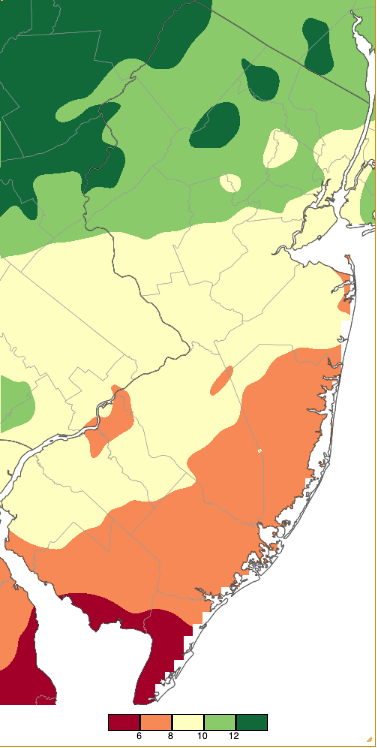
Figure 7. Spring 2026 (March 1st–May 31st) precipitation across New Jersey based on a PRISM (Oregon State University) analysis generated using NWS Cooperative and CoCoRaHS observations. Note the scale in full inches at the bottom of the map. Totals range from 4.00”–5.99” (dark red) to 12.00”–13.99” (dark green).
Statewide, spring snowfall was nearly absent. Only March saw a snow event that deposited 0.8” in Upper Deerfield (Cumberland) and 0.5” at locations in Burlington, Gloucester, Morris, and Somerset counties. Other than flurries or local dustings, that was all that fell to end what otherwise was an above-normal snowfall season (see April report for the seasonal snow summary).
Throughout spring, NJ remained under a Drought Warning issued by the NJ Department of Environmental Protection. Early spring found the worst conditions in the northwest, with lesser concerns in Atlantic coastal counties (Figure 8, top). As spring ended, almost all south Jersey was worse off, sitting at a Severe Drought level (D2) according to the U.S. Drought Monitor while the north was classified as in Moderate Drought (D1; Figure 8, bottom).
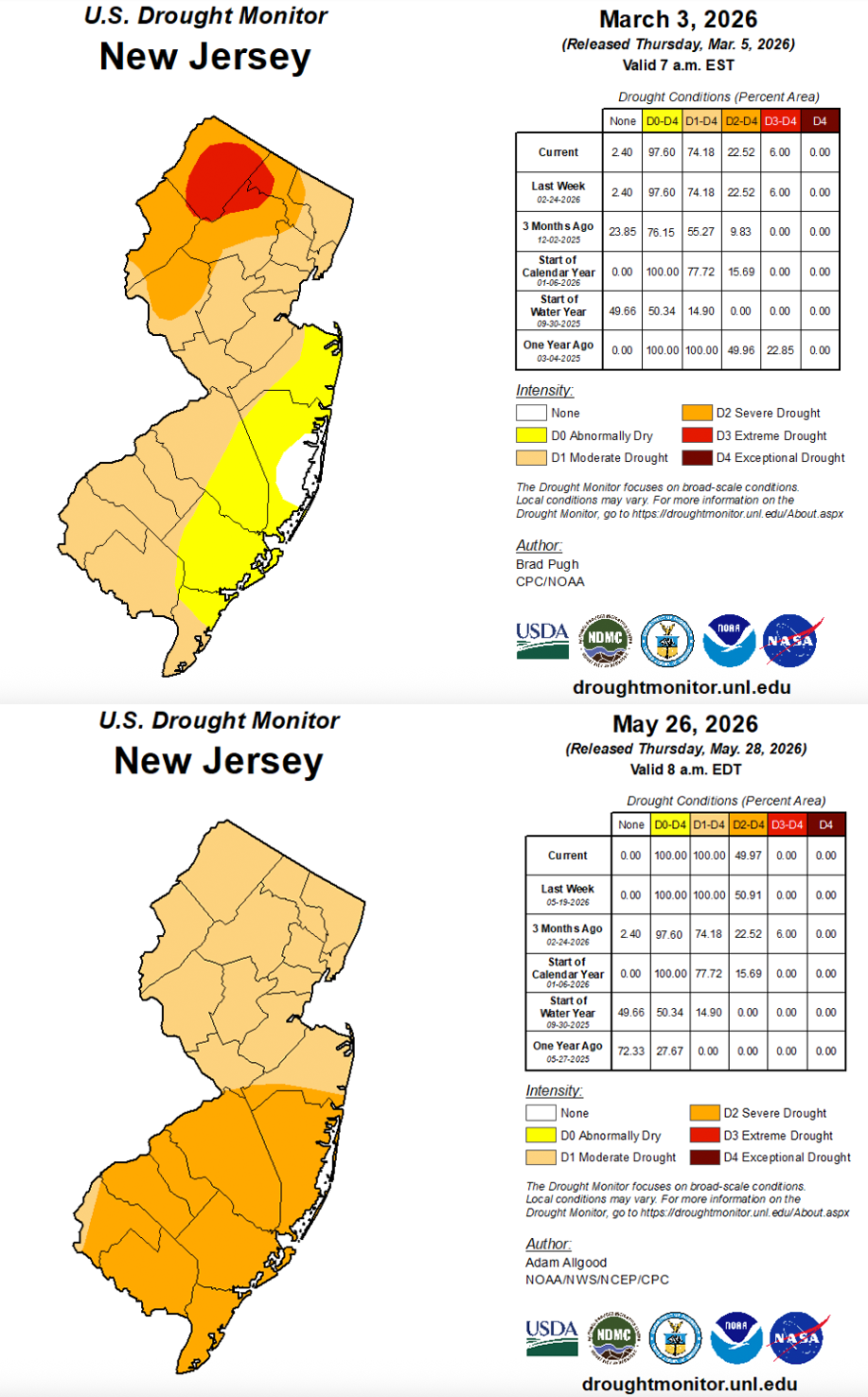
Figure 8. Top: U.S. Drought Monitor map of conditions in NJ as of March 3, 2026.
Bottom: conditions as of May 26, 2026.
Spring 2026 drought conditions continue a pattern of precipitation deficits beginning in May 2024. Since that time, 22 of the 25 months have exhibited below-normal statewide precipitation. Breaking this period down further, year-to-date precipitation sits at 12.77”. This is 5.23” below normal and ranks as the 6th driest start of a year since records commenced in 1895. The past 12 months come in at 33.94”, 13.62” below normal and ranking as the 3rd driest June-May interval on record (Table 1).
| Rank | Years | June to May Precip. |
|---|---|---|
| 1 | 1966 | 31.81” |
| 2 | 1965 | 32.51” |
| 3 | 2026 | 33.94” |
| 4 | 2002 | 34.21" |
| 5 | 1981 | 34.32" |
| 6 | 1985 | 34.89" |
| 7 | 1950 | 34.94" |
| 8 | 1930 | 35.68" |
| 9 | 1931 | 35.70" |
| 10 | 1969 | 36.08" |
Table 1. The 10 driest 12-month June to May periods since 1895. The year noted is the May year.
Looking back over the past 24 months, the 71.00” that has accumulated is 24.12” below normal. This is 75% of normal, which essentially means that over the past two years, there have been six months’ worth of missing precipitation. This epitomizes drought in New Jersey. It is not about rain failing to fall (aside from months such as the record-dry October 2024, with just 0.02” statewide). Rather, it is a more a matter of more frequent precipitation “misses” than normal, and when systems arrive they often “underperform,” failing to produce sufficient totals. The only underlying positive when it comes to NJ drought is that with the rather equitable distribution of precipitation throughout the year, a rebound from a drought pattern is possible at any time of the year. When that rebound will occur, for now, remains unknown.
| Rank | Years | 2-year June to May Precip. |
|---|---|---|
| 1 | 1966 | 64.32” |
| 2 | 2026 | 71.00” |
| 3 | 1931 | 71.38” |
| 4 | 1965 | 71.46" |
| 5 | 1967 | 72.19" |
| 6 | 1955 | 75.27" |
| 7 | 1911 | 75.48" |
| 8 | 1932 | 75.82" |
| 9 | 1982 | 76.39" |
| 10 | 1926 | 76.70" |
Table 2. The 10 driest 24-month June to May periods since 1895. The year noted is for May of year 2.
Taking one last look at historic drought behavior, precipitation over any consecutive 24-month period was examined. The past 24-month total ranks as the 24th driest of any consecutive 24-month total since 1895. This is out of 1,554 such intervals, thus falls between the 1st and 2nd percentile. The driest 24-month period is 60.71” from August 1964–July 1966. The 23 periods ranking above the present one are all from the prolonged drought in the mid 1960s (earliest December 1962–November 1964, latest May 1965–April 1967).
March, April, and May saw above-average temperatures, with April the 6th mildest since 1895. This persistence resulted in spring 2026 coming in tied with 2025 and 1991 as 5th mildest (Table 3). At 53.8°, spring temperatures averaged 2.5° above the 1991–2020 normal. Six of the eight mildest springs over the past 132 years have occurred since 2004.
| Rank | Year | Spring Avg. Temp. |
|---|---|---|
| 1 | 2012 | 55.8° |
| 2 | 2010 | 55.2° |
| 3 | 1921 | 54.2° |
| 4 | 2024 | 54.1° |
| 5 | 1991 | 53.8° |
| 5 | 2026 | 53.8° |
| 5 | 2025 | 53.8° |
| 8 | 2004 | 53.6° |
| 9 | 1945 | 53.3° |
| 10 | 1977 | 53.2° |
Table 3. The 10 mildest springs across NJ since 1895.
Extreme minimum temperatures during spring ranged from 10°–15° in the northwest to the upper 20°s close to the Atlantic and Delaware Bay coasts and up the Delaware River to Camden County (Figure 9).
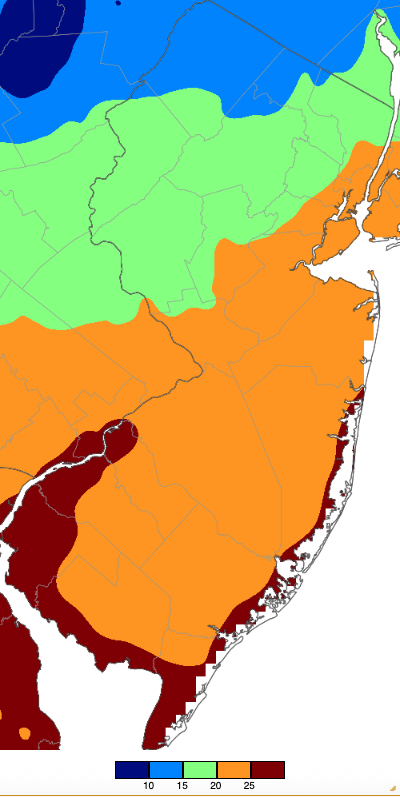
Figure 9. Extreme minimum temperatures during spring 2026 based on a PRISM (Oregon State University) analysis generated using NWS, NJWxNet, and other professional weather stations. The seasonal minimum occurred on different days at different locations.
The warmest spring maximum temperatures ranged from the upper 80°s near the coast in southern Cape May and Cumberland counties to the mid and upper 90°s over a sizeable portion of interior NJ, except the low 90°s in most of the northwest (Figure 10).
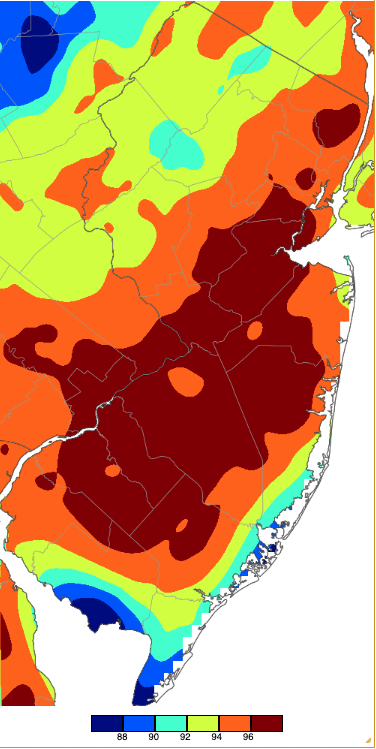
Figure 10. Extreme maximum temperatures during spring 2026 based on a PRISM (Oregon State University) analysis generated using NWS, NJWxNet, and other professional weather stations. The seasonal maximum occurred on different days at different locations.